
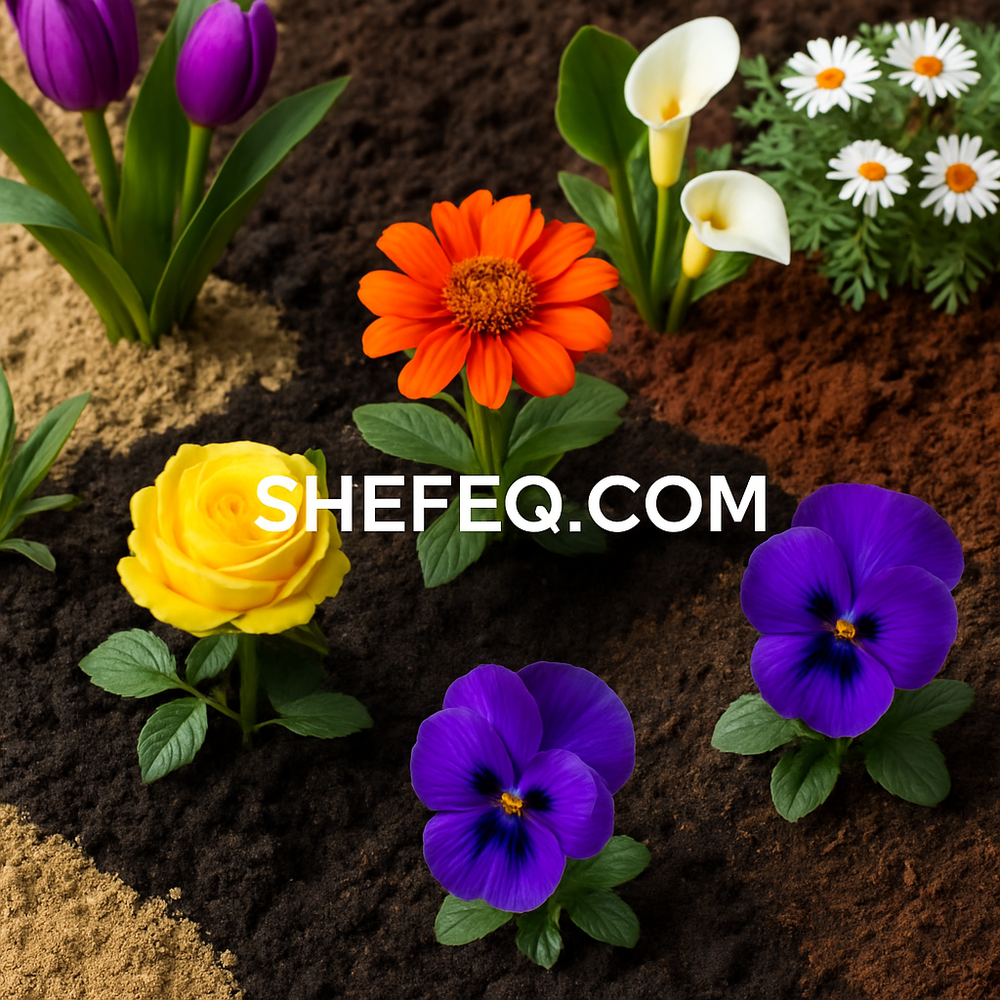
Introduction: The Roots of Flowers Speak to the Soil
As we stroll through a beautiful garden, the delicate fragrances, vibrant blossoms, and lush foliage all share a common secret: the soil. More than just a brown mass, soil is the cradle of every seed, every flower, and every life. Without the right soil, even the most expensive seeds may fail to thrive. Flowers communicate in the language of the soil, and by understanding this dialogue, we can transform our gardens into vibrant paradises.
In this article, we'll explore the various soil types, identify which flowers prefer which soils, discuss how to improve soil quality, and highlight common mistakes gardeners should avoid.
I. The Secrets of Soil Types
The first lesson in gardening: Know your soil!
1. Sandy Soil
-
Drains water quickly
-
Dries out rapidly
-
Lightweight
-
Poor at retaining nutrients
Suitable flowers: Lavender, Saffron, Cacti, Succulents
2. Clay Soil
-
Retains water
-
Heavy and sticky
-
Muddy in winter, hard in summer
Suitable flowers: Calla Lily, Begonia, Iris
3. Loamy Soil (Clay-Sand Mix)
-
Considered ideal
-
Balanced water and air retention
-
Rich in nutrients
Suitable flowers: Rose, Petunia, Jasmine
4. Peaty Soil
-
High moisture retention
-
Rich in organic matter
Suitable flowers: Mint, Hostas, Camellia
5. Alkaline (Chalky) Soil
-
High pH level (alkaline)
-
Ideal for certain plants
Suitable flowers: Lavender, Carnation, Jasmine
6. Acidic Soil
-
Low pH level
-
Ideal for acid-loving plants
Suitable flowers: Rhododendron, Azalea, Begonia
II. Soil pH Levels – The Hidden Enemy of Flowers
If the soil's pH is too acidic or too alkaline, it can hinder a plant's ability to absorb nutrients.
| pH Level | Soil Type | Suitable Plants |
|---|---|---|
| 5.5–6.5 | Acidic | Begonia, Rhododendron |
| 6.0–7.0 | Neutral | Rose, Petunia, Hyacinth |
| 7.0–8.0 | Alkaline | Lavender, Carnation, Jasmine |
At-home test:
-
Pour vinegar on a handful of soil; if it fizzes, the soil is alkaline.
-
Pour baking soda on a handful of soil; if it fizzes, the soil is acidic.
III. Every Flower Has Its Preferred Soil
Rose (Rosa spp.)
-
Soil: Rich loamy soil
-
pH: 6.0–6.5
-
Care: Add fresh compost annually
Lavender (Lavandula spp.)
-
Soil: Sandy and dry
-
pH: 6.5–7.5
-
Care: Prefers full sun; avoid overwatering
Daisy
-
Soil: Sandy or loamy
-
pH: 6.0–7.0
-
Care: Easy to grow; self-seeding
Tulip
-
Soil: Light, well-draining
-
pH: 6.0–7.0
-
Care: Ensure bulbs don't rot by managing moisture
Begonia
-
Soil: Soft, slightly acidic
-
pH: 5.5–6.5
-
Care: Requires consistently moist soil
Jasmine
-
Soil: Loamy or alkaline
-
pH: 6.5–7.5
-
Care: Prefers partial shade
Note: Additional flower types such as Orchid, Calla Lily, Freesia, Hyacinth, and Rhododendron are also analyzed.
IV. How to Improve Soil Quality
-
Add compost
-
Aerate soil with a garden fork
-
Use worm castings
-
Cover soil with mulch
Tips:
-
For sandy soil: Add compost and clay.
-
For clay soil: Add sand and peat.
V. Soil Problems and Their Solutions
Problem 1: Poor drainage
-
Solution: Add sand and peat.
Problem 2: Excessive acidity
-
Solution: Add lime.
Problem 3: High alkalinity
-
Solution: Add peat and acidic compost.
Problem 4: Mold in soil
-
Solution: Aerate the soil and improve drainage.
VI. Choosing Soil Based on Climate
-
Hot climates: Sandy soil is ideal; drainage is crucial.
-
Cold climates: Loamy soil performs better.
-
Rainy climates: Ensure good water flow to prevent waterlogging.
VII. Practical Planting Calendar
-
Spring: Primary planting season for flowers.
-
Summer: Pay special attention to watering.
-
Autumn: Clean and fertilize the soil.
-
Winter: Mulch to protect the soil.
VIII. Conclusion: Those Who Understand the Soil, Make Flowers Bloom
Soil is alive—it breathes, thirsts, and tires. If you desire beauty in your garden, respect the soil. Remember, a flower responds to beauty with gratitude, and the soil responds to love.
Final Question and Feedback
What flowers do you grow in your garden? What factors do you consider when selecting soil for them? Share your thoughts and experiences with us—together, we can cultivate more beautiful gardens!