
Introduction
Imagine waking up one early morning with the sun shining, continuing your ordinary day: going to the market, bathing at the public baths, chatting with friends, having lunch with your family. But by midday, everything changes. The ground begins to shake, ash and rocks rain from the sky. Within seconds, your city is plunged into darkness — and your life freezes where it stands.
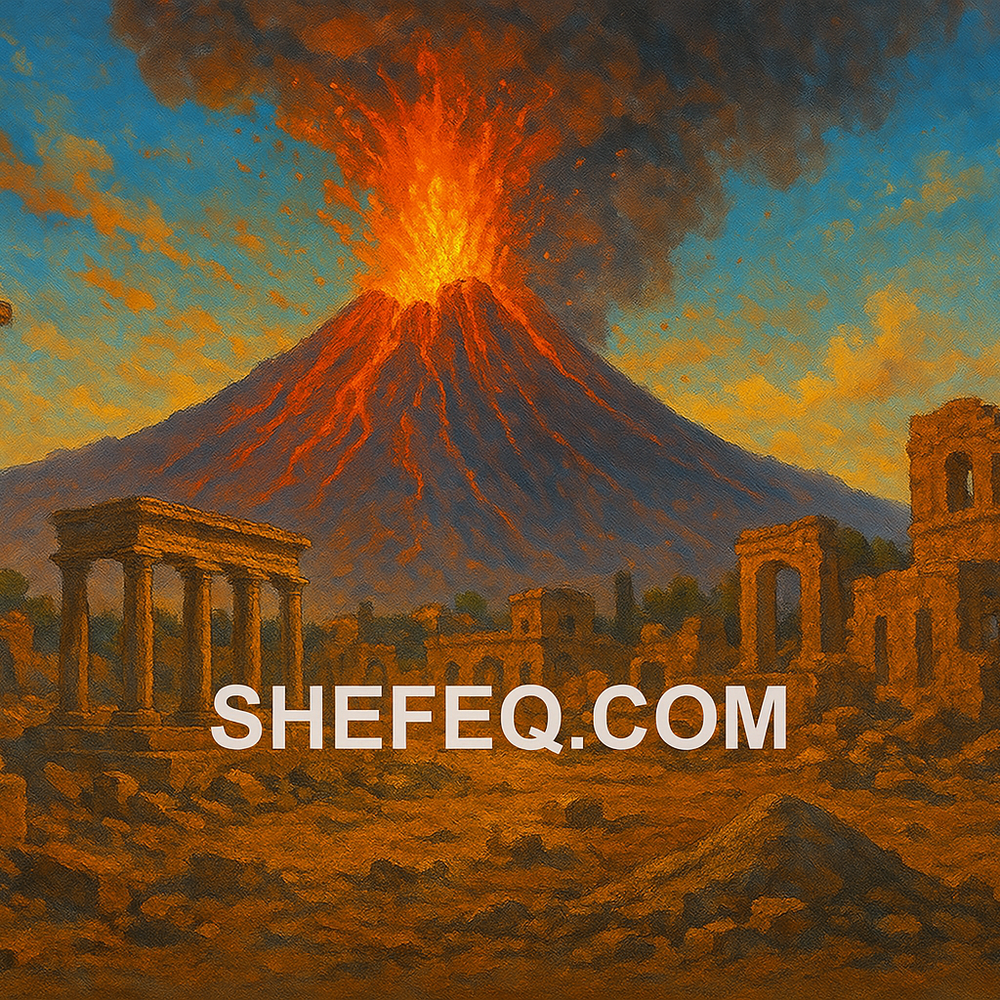
This isn’t a scene from fiction. It’s a real event that occurred in August of the year 79 AD. The ancient Roman city of Pompeii, located in Italy, was completely buried within hours by the sudden eruption of Mount Vesuvius. What’s strange and haunting is that the city remained preserved for thousands of years — life was frozen, moments turned to stone.
Pompeii – A Glimpse into the Daily Life of Ancient Rome
Pompeii was one of the wealthiest and most advanced cities of the Roman Empire. Situated on the Bay of Naples, it was rich in trade, culture, art, and entertainment. According to archaeologists:
-
The population was about 11,000 people
-
The city had public baths, theaters, markets, and villas adorned with colorful frescoes
-
Its residents lived with comfort and high standards of living
The Eruption of Vesuvius: Sudden Descent into Darkness
On August 24, 79 AD, in the afternoon, Mount Vesuvius erupted without warning. The earth trembled, thick smoke blanketed the sky, and the city was soon covered with ash, lava, and rock fragments. The eruption unfolded in several phases:
-
Pyroclastic flows — superheated gas and ash raced through the city
-
Ash and pumice rain — roofs collapsed, streets disappeared
-
Lava and toxic gas pressure — breathing became impossible
Panic spread among the people. Some tried to flee; others took shelter in their homes, hoping to survive. But only a few managed to escape.
Frozen in Time: Bodies Turned to Stone
When archaeologists began excavating the city, they were met with an astonishing sight: petrified bodies, people frozen in their daily routines, animals, objects...
-
A mother clutching her child
-
Broken chairs, collapsed roofs, people frozen mid-run
-
Even food remained on dining tables
These discoveries capture a city caught in a single, tragic moment.
Archaeological Discovery and Scientific Impact
Although Pompeii was first rediscovered by accident in 1599, systematic excavations began in the 18th century. Since then:
-
Thousands of artifacts have been uncovered
-
Frescoes and inscriptions have been preserved on walls
-
Every detail of daily life — clothing, food, entertainment, religion — has been studied
Pompeii is considered a “time capsule” in archaeology: a rare example of a Roman city frozen exactly as it was.
Cultural and Human Significance
Pompeii is more than a monument to tragedy — it’s a mirror reflecting both the fragility and grandeur of human life.
-
Wealth, beauty, and development… yet a world that vanished in a single moment
-
Despite being buried for centuries, you can still feel the emotions, fear, and hope of its people
-
The city is living proof that the past can still “speak” to us
Tourism and Legacy
Today, Pompeii is a UNESCO World Heritage Site, visited by millions each year. People come to feel the breath of the past — to understand how beautiful and yet how fleeting life can be.
Conclusion
The tragedy of Pompeii was not just the destruction of a city. It is a lesson about the deep interconnection between human life, history, and the forces of nature. Its frozen citizens remind us daily:
“Time is precious. Life is beautiful. But nothing lasts forever.”