
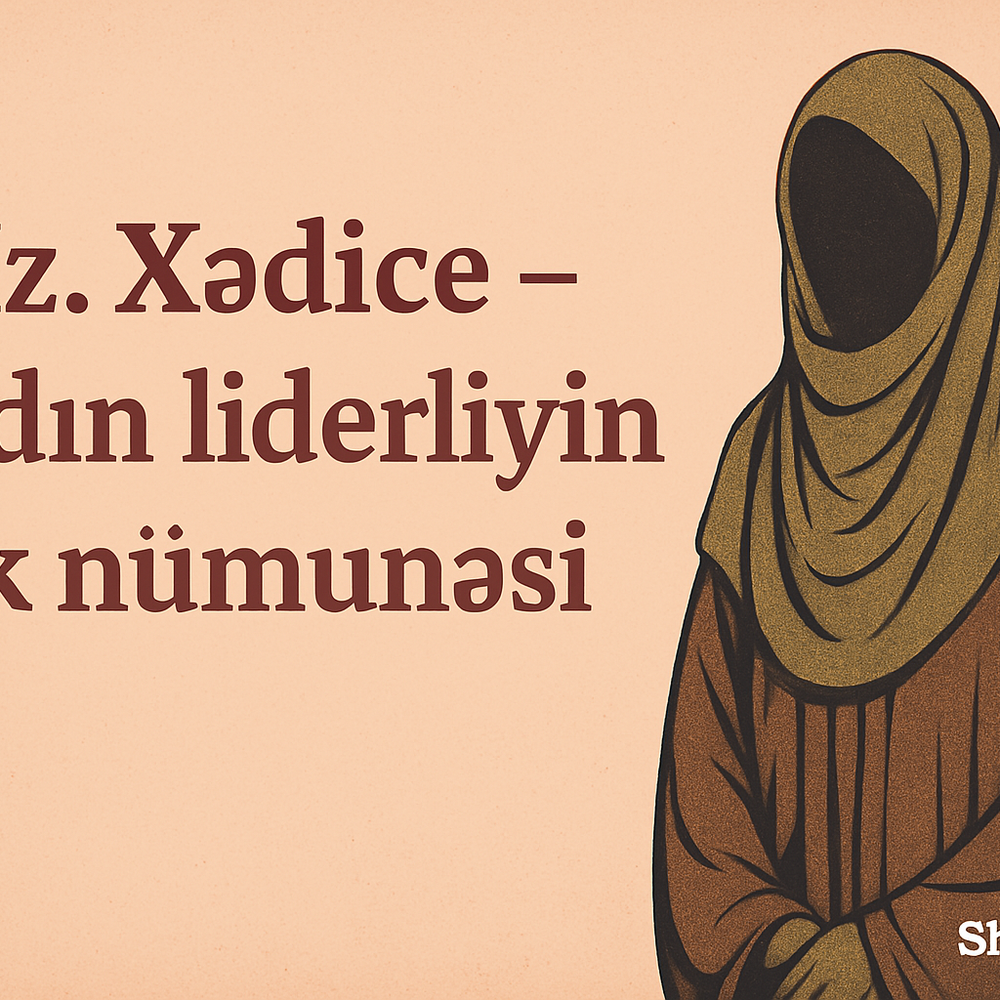
Introduction History has seen countless women who have left their mark, who stood firm against the harsh rules of time, playing irreplaceable roles in shaping society. Among them stands a woman of exceptional spiritual and social stature: Khadijah bint Khuwaylid (may Allah be pleased with her). She was not only the first woman to embrace Islam but also a respected figure in trade, a symbol of social justice, and a unique example of moral leadership. In an era dominated by men, when women had almost no voice, Khadijah became a shining example of female leadership with her willpower, intelligence, and courage.
I. Social Aspect: A Woman Who Transcended Society’s Boundaries In the pre-Islamic era (Jahiliyyah), women generally held passive roles within the family and were excluded from public decision-making spheres. Khadijah changed that. Born into a wealthy family, she managed the wealth inherited from her father with wisdom and gained great influence in the markets of Mecca through trade caravans. Among her trusted workers was the future Prophet Muhammad (peace be upon him), a collaboration that later evolved into a profound love and spiritual partnership. Socially, Khadijah proved that a woman could have a voice not only in the family but also in society. Her just leadership, compassion for people, and charitable habits earned her the nickname "Tahira" (the pure one) among the people.
II. Academic Perspective: The Traits of Female Leadership According to modern leadership theories, effective leadership requires strategic thinking, communication skills, empathy, courage, and decision-making ability. Khadijah embodied each of these qualities:
-
Strategic Thinking and Management: Her planned and analytical approach in trade not only increased her wealth but also provided for others.
-
Empathy and Valuing People: She treated her servants and caravan leaders with compassion, protected their rights, and never humiliated anyone.
-
Determination and Faith: When Prophet Muhammad (pbuh) received his divine mission, she supported him without hesitation and became the first believer.
These qualities made her a role model for women in her time and for generations to come.
III. Social Impact: Women’s Rights and Freedom Khadijah was not just a housewife or merchant. She was living proof that women could have equal rights in society. She chose to marry Prophet Muhammad (pbuh) on her own initiative, proposed to him herself, and supported the marriage financially—an extraordinary and revolutionary act for that time.
When persecution against Muslims began in the early years of Islam, Khadijah dedicated all her wealth to the cause of this new religion and stood by the Prophet in every step. Her loyalty to family and the religious mission showed that women must participate actively in both family and societal development.
IV. Historical and Analytical View: The Beginning of the Female Leadership Model in Islam Historians and Islamic scholars study Khadijah’s life not only from a religious angle but also from social and psychological perspectives. Her life highlights the role of women in education, economics, and family governance.
Sources indicate that even in the later years of his life, the Prophet Muhammad (pbuh) remembered Khadijah with respect and affection, saying: “Khadijah believed in me when no one else did. She supported me with her wealth and was a pillar to my mission.” These words testify to her immense influence as a spiritual and moral leader.
Conclusion Khadijah is a symbol of female leadership, compassion, courage, and spiritual resilience. Her life is not only an example in religious terms but also in social, economic, and human values. Today, as women increasingly take on leadership roles, the struggle for equality continues. In this struggle, Khadijah’s legacy offers strength and direction to women.
Her example shows that leadership does not lie solely in political or economic power but in spiritual strength, a sense of justice, and a desire to serve humanity. Thus, Khadijah’s name is immortalized in history not just as a woman, but as an ideal leader for all humanity.