
INTRODUCTION: Touching the Body, Awakening Religious Questions
The human body is both a material and a spiritual entity. The body is the home of the soul and the carrier of a person’s inner world. Therefore, when a person interferes with their body, not only medical and aesthetic questions arise — religious, psychological, and ethical questions also emerge.
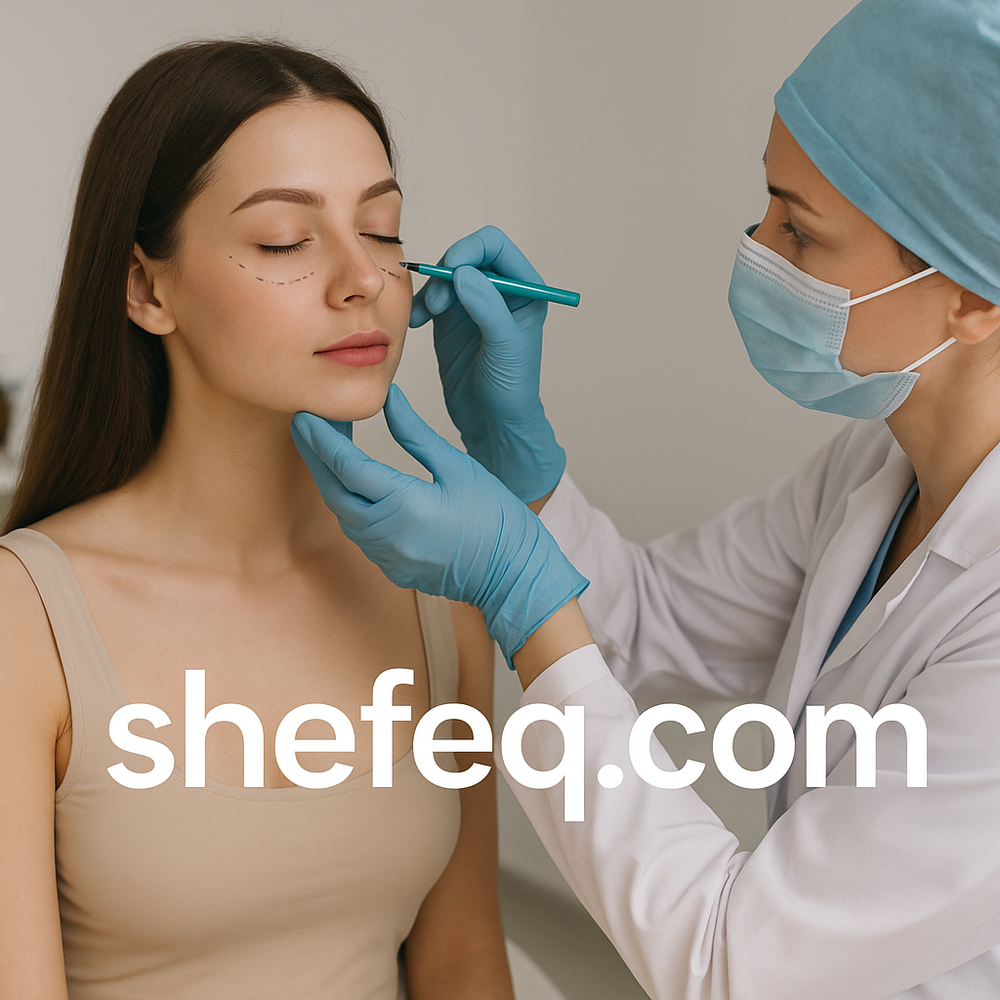
In the modern world, aesthetic surgeries — especially among women — have become a part of everyday life. Nose surgery, lip enhancement, liposuction, facelift, hair transplant, blepharoplasty, tummy tuck, breast reduction and augmentation… These are no longer considered unusual.
But every Muslim woman carries one question in her mind:
“Is this procedure permissible in Islam?”
This question seems simple, but the answer is multi-layered, and Islamic scholars have extensively debated it in jurisprudential discussions. Whether an aesthetic procedure is permissible or not depends on intention, type of procedure, medical necessity, psychological condition, degree of safety, and social factors.
This article explains in full depth the most frequently asked question by women —
“Is aesthetic surgery acceptable in Islam or not?”
I. The Body and Religion — The Status of the Human Body in Islam
1. The body is a trust (amānah)
In Islam, the human body is a trust (amānah) given by Allah. This is emphasized repeatedly in the Qur’an and hadith:
“We created man in the best form.”
(Surah At-Tin, 4)
This verse states that the body was created perfectly by Allah. This does not mean that a person should never make any changes. However, one must treat the body with respect and avoid unnecessary harm.
2. Causing harm to the body is prohibited
The Prophet (peace be upon him) said:
“Do not harm yourself or others.”
(Ibn Majah)
This principle is fundamental when evaluating aesthetic procedures.
II. Types of Aesthetic Procedures — Main Jurisprudential Classification
Islamic scholars divide aesthetic surgery into two categories:
A) Medical necessity or removal of a defect (permissible)
This includes:
-
congenital deformities (clefts, asymmetries, birth defects)
-
post-accident deformities
-
burn scars and injuries
-
issues causing medical problems (e.g., overly large breasts causing back pain)
-
deviated septum affecting breathing
-
functional skin problems
These are permissible because the goal is not beauty but correction of a defect.
Fiqh principle:
Procedures that remove a defect are permissible.
B) Purely cosmetic procedures — for beauty alone (permissible, disliked, or prohibited depending on intention)
This includes:
-
nose sharpening only for aesthetics
-
lip fillers
-
cheek contouring
-
liposuction only “to look slimmer”
-
hair extensions (opinions vary)
-
wrinkle fillers
-
facelift, neck lift
-
altering body shape purely for looks
The ruling differs among scholars and depends mainly on intention and safety.
III. Intention Changes the Ruling — From the Perspective of Islamic Psychology
The main factor in determining the ruling of a procedure in Islam is intention (niyyah).
1. Surgery to overcome painful complexes
This serves psychological well-being. Psychologists confirm that for some women, dissatisfaction with the nose, abdomen, breasts, lips, or body shape severely affects their self-worth, marriage, and social behavior.
Fiqh considers:
If a woman:
-
does not love herself,
-
suffers psychological distress without surgery,
-
and surgery improves her quality of life,
→ the procedure may be permissible.
Because the goal is not altering Allah’s creation, but protecting mental health.
2. Surgery to resemble others
For example:
-
trying to look like a celebrity
-
following a trend
-
fitting social media beauty standards
This intention is considered incorrect, and many scholars prohibit it.
3. Surgery to appear more attractive to one’s husband
This is considered permissible and sometimes even recommended, because:
-
it strengthens marital relations
-
beauty and self-care are a woman’s right
-
it supports the harmony of family life
Many scholars (Ibn Qudamah and others) say:
“Changes made by a woman to beautify herself — as long as they are not forbidden — are permissible.”
IV. The Verse “Changing Allah’s Creation” — Misunderstood?
Many people consider aesthetic procedures forbidden based on the verse:
“I will command them to change Allah’s creation.”
(Surah An-Nisa, 119)
But major scholars (Ibn Uthaymeen, Qaradawi, Al-Azhar scholars) explain:
This verse refers to prohibited changes, such as:
-
plucking eyebrows
-
men imitating women or vice versa
-
tattoos
-
deforming the body unnecessarily
This does not apply to medically sound and reasonable aesthetic procedures.
V. Religious Rulings on Various Aesthetic Procedures
1. Rhinoplasty (nose surgery)
-
breathing problems → permissible
-
large or crooked nose causing distress → permissible
-
only for fashion → disliked or prohibited
Scholars' view:
“A woman may correct a significant congenital defect.”
2. Lip augmentation / fillers
-
asymmetry or emotional discomfort → permissible
-
only for trend → discouraged
-
extremely exaggerated → falls under extravagance (isrāf)
3. Liposuction
-
for health (obesity, pain) → permissible
-
for shaping → permissible
-
dangerous versions → prohibited
-
for celebrity-like appearance → disliked
4. Breast enlargement / reduction
-
medical issues or back pain → permissible
-
for personal confidence or marital harmony → permissible
-
excessive sexualization → disliked
5. Scars, burns, and post-accident surgeries
→ fully permissible, even recommended.
6. Facelift, neck lift
-
age-related discomfort → permissible
-
unnatural, extreme → extravagance
7. Botox
-
for medical reasons (bruxism, migraines) → permissible
-
for wrinkles only → permissible
8. Hair extensions
-
if experiencing significant hair loss → permissible
-
to deceive others → disliked/prohibited
-
synthetic hair → scholars differ
VI.The psychological aspect of cosmetic surgery – what does Islamic psychology say?
Research shows:
-
86% of women dislike at least one part of their body
-
60% undergo cosmetic surgery to “feel better”
Islam protects mental well-being.
If the surgery:
-
improves a woman’s self-esteem,
-
strengthens marital relations,
-
helps her feel confident in society,
→ scholars consider it acceptable.
But if it:
-
fuels obsessive body modification,
-
leads to “surgery addiction,”
-
makes her believe her worth is only physical,
→ it becomes religiously harmful.
VII. Aesthetic Surgery and Women — Religious View on Social Pressure
Islam forbids oppression against women.
If a woman undergoes surgery:
-
because her husband forces her,
-
due to societal pressure,
-
to look good for social media,
→ this is not acceptable in Islam.
A woman must choose surgery:
-
by her own will,
-
for her own comfort,
-
aligned with her values.
VIII. Sharia Conditions for Aesthetic Surgery
Scholars set the following conditions:
-
No significant medical risk
-
Benefit must outweigh harm
-
Female doctor if possible
-
No imitation of the opposite sex
-
No extravagance (isrāf)
-
No intention to deceive
IX. Conclusion: Is Aesthetic Surgery Permissible for Women?
Short answer: YES — WITH CONDITIONS.
Aesthetic surgery is not completely haram.
It is not completely halal either.
Everything depends on:
-
intention,
-
psychological reasons,
-
medical necessity,
-
and safety.
Permissible procedures:
congenital deformities
post-accident damage
psychologically distressing defects
health-related issues
mild changes to feel better
enhancing marital comfort
Not permissible:
imitation of others
trend-driven surgeries
excessive, dangerous, wasteful procedures
surgeries for deception
gender imitation
Islam’s message:
You may change your body — but your intention must be pure.
And remember: the most beautiful transformation is within the soul.