Introduction: Is Religion Meant for the Past?
Modern people often think this way:
“Religion belongs to ancient times. Today’s world needs different answers.”
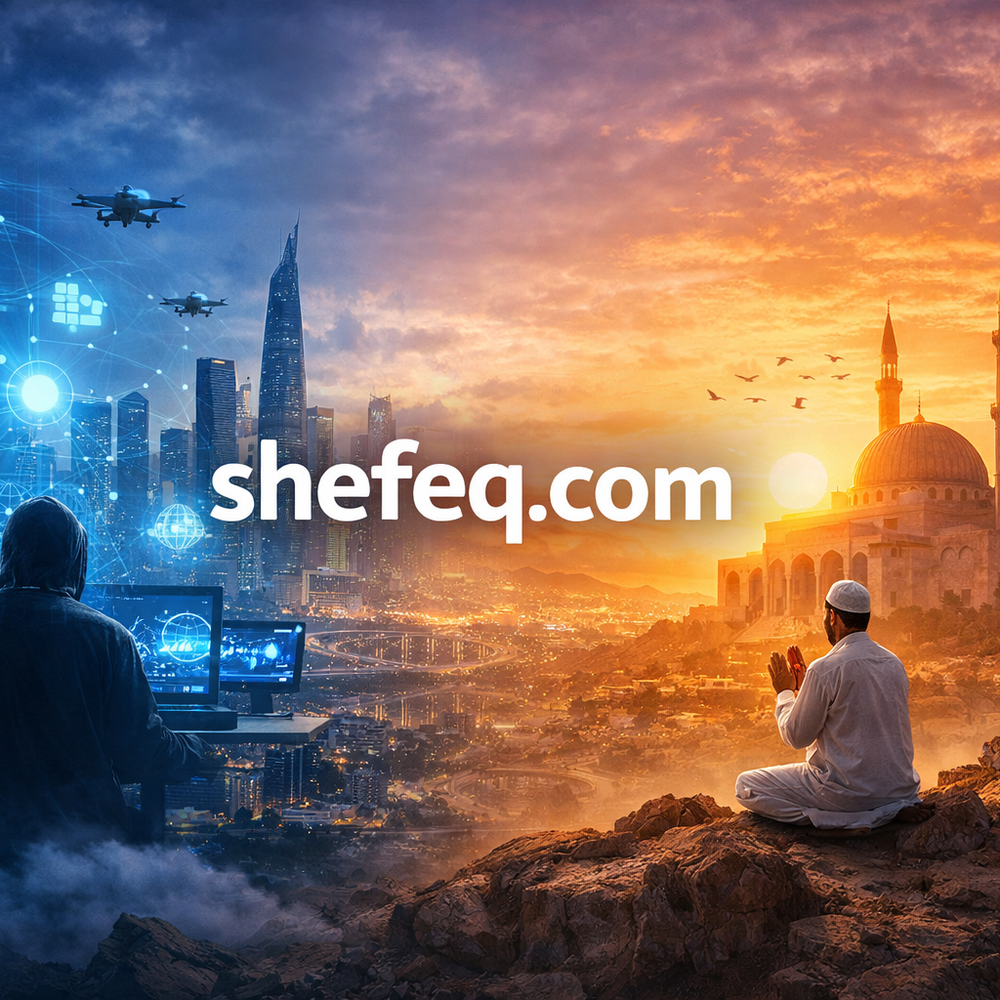
Technology is advancing rapidly, artificial intelligence has become part of everyday life, humans are planning missions to Mars, genes are being modified, and information spreads within seconds. In such a world, people ask:
“What can Islam say to this world?”
This question does not arise from disbelief, but from a hunger for meaning. Because the modern person has almost everything—yet lacks inner peace.
Islam, however, does not begin by talking about technology.
Islam speaks about the human being.
Because times change,
but human fears, desires, and needs do not.
What Is the Main Problem of the Modern Human?
The problem of the modern human is not ignorance.
On the contrary—it is an excess of information.
People know:
-
what they should eat,
-
how they should live,
-
how to be successful.
But they do not know:
-
why they live,
-
why they feel exhausted,
-
why they experience a sense of emptiness.
Islam begins precisely at this point.
Because before answering “how to live,”
Islam answers the question “why to live.”
Does Islam Call the Modern Human Backward?
No.
Islam does not seek to return people to the past.
Islam returns people to themselves.
Islam says:
“Do not live fast—live consciously.”
The modern human is accustomed to speed.
But speed does not provide depth.
Islam provides depth.
Prayer is not fast.
Fasting is not fast.
Supplication (duʿāʾ) is not fast.
They slow a person down
so that one can hear oneself.
The Concept of Freedom: The Modern World and Islam
The modern world defines freedom as:
“Do whatever you want.”
Islam says instead:
“Choose what is right.”
These two views may seem contradictory.
But let us look at the results.
A person who does whatever they want:
-
becomes dependent,
-
becomes tired,
-
becomes internally empty.
A person who chooses what is right:
-
gains self-control,
-
develops a sense of responsibility,
-
achieves inner stability.
Islam understands freedom as freedom from the ego (nafs).
And this is the kind of freedom modern humans need most.
Islam and Psychological Well-Being
Modern people are psychologically exhausted:
-
depression,
-
anxiety,
-
panic attacks,
-
a sense of meaninglessness.
Islam does not deny this.
Islam says:
“The heart can become tired.”
But Islam also says:
“Hearts find peace only in the remembrance of Allah.”
This is not a slogan.
It is an experience.
Prayer:
-
focuses attention on a single point,
-
stops constant rushing,
-
brings a person back to the “here and now.”
Supplication:
-
makes a person feel they are not alone,
-
shares the inner burden,
-
keeps hope alive.
Islam and Science: Conflict or Completion?
Modern people often place science and religion in opposition.
Yet Islam, from the very beginning, called for knowledge.
The command “Read” is not accidental.
Islam says:
-
“Think.”
-
“Reflect.”
-
“Investigate.”
But Islam also reminds us:
Science gives power, but it does not give wisdom.
Wisdom is the answer to the question “why.”
Why Is Islam Still Relevant?
Because Islam was not sent for a specific time,
but for the human being.
Times change:
-
clothing changes,
-
technology changes,
-
lifestyles change.
But humans do not change:
-
they fear,
-
they love,
-
they lose,
-
they regret,
-
they seek forgiveness.
Islam responds to all of this.
The Modern Human’s Objection to God
Modern people often say:
“If God exists, why is there so much injustice?”
Islam does not avoid this question.
Islam says:
“This world is not the place of ultimate justice;
it is the place of testing.”
Justice comes at the end,
the world is only the path.
This perspective makes a person responsible.
Because they now understand:
“I do not live in this world only for myself.”
What Does Islam Say to the Modern Human?
-
Do not live fast—live meaningfully
-
Do not try to own everything—own yourself
-
Do not fear—trust
-
You are not alone—you are with Allah
Islam does not lead the modern human backward.
Islam leads them inward—toward depth.