
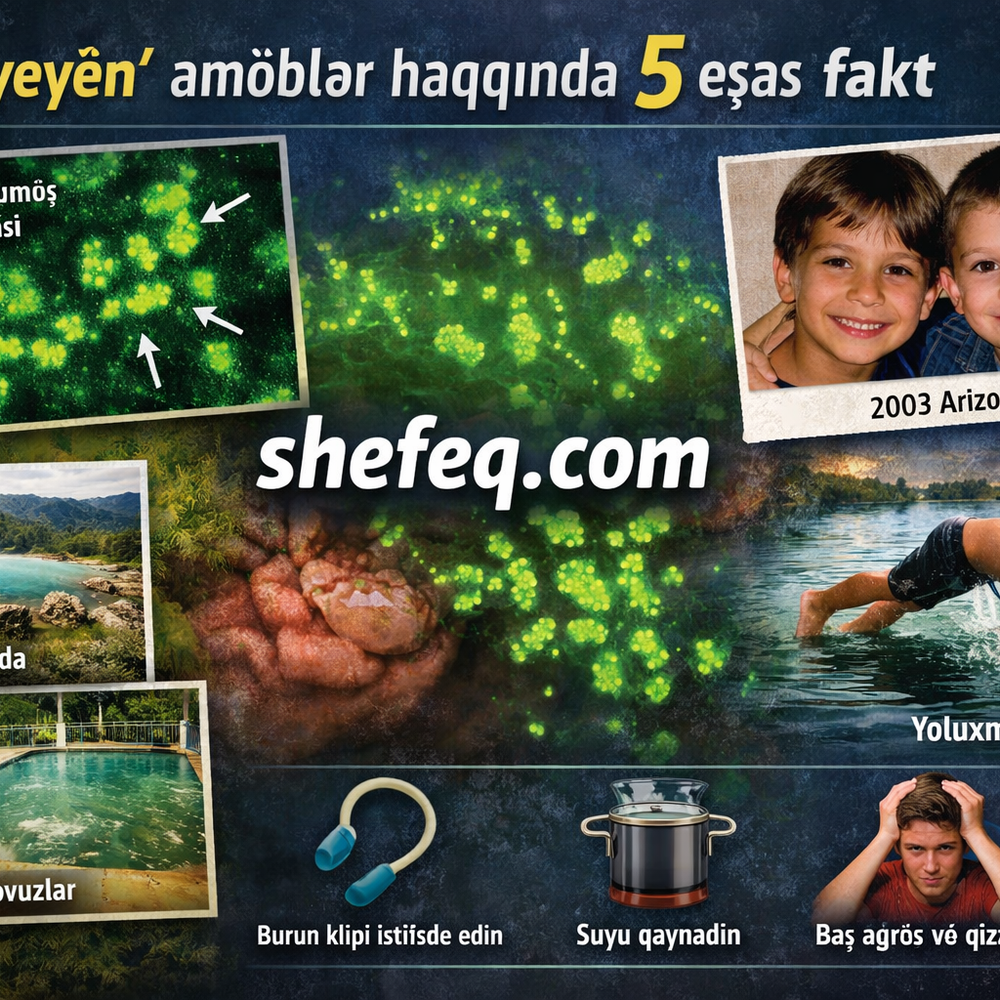
Microorganisms are widespread in nature, but the deadly infections they cause are relatively rare. Nevertheless, some species of amoebae can pose a serious threat to human health. The most notable among them is a parasite called Naegleria fowleri, commonly known to the public as the “brain-eating amoeba.”
When observed under a microscope using fluorescent light, these amoebae appear as bright green dots and may sometimes form large clusters. Below is essential, science-based information about this rare but deadly parasite.
Case example
In 2003, two teenage brothers in the U.S. state of Arizona died as a result of a suddenly developing severe inflammation of the brain. Investigations conducted by researchers from Virginia Commonwealth University determined that the source of infection was the unchlorinated water supply in the family’s home. The deadly amoeba Naegleria fowleri was detected in the water system. According to scientists, the children were likely infected during bathing, particularly through contact with water in the lower part of the bathtub.
1. Where is it found?
Naegleria fowleri can exist in various environments around the world, especially:
-
warm freshwater rivers and lakes
-
some warm (geothermal) hot springs
-
poorly maintained and unchlorinated swimming pools
-
muddy puddles formed after rainfall
-
in rare cases, household plumbing systems
Although it is more commonly found in warm climates, this amoeba is not limited exclusively to such regions.
2. How does infection occur?
This parasite enters the human body only through the nose. The amoeba travels from the nasal cavity to the brain, where it triggers a strong immune response, resulting in severe inflammation.
Infection usually occurs when:
-
jumping into lakes or rivers
-
submerging the head underwater
-
rinsing the nasal passages or sinuses with water
Important notes:
-
Drinking contaminated water is not dangerous
-
The disease does not spread from person to person
3. How can one protect themselves?
-
Use a nose clip when swimming in natural bodies of water
-
Water used for nasal or sinus rinsing should be:
-
boiled for at least 1 minute at sea level
-
boiled for 3 minutes at elevations of 2,000 meters or higher
-
-
Alternatively, special filters with a pore size of 1 micrometer or smaller should be used
4. What are the symptoms?
Symptoms usually appear 1–12 days after exposure.
Early symptoms include:
-
severe headache
-
high fever
-
nausea and vomiting
As the disease progresses:
-
neck stiffness
-
confusion and hallucinations
-
loss of balance
-
seizures
Because the disease progresses rapidly, immediate medical intervention is critical.
5. How dangerous is it?
Although the infection is extremely rare, the fatality rate is very high. In the United States, between 2005 and 2014, only 35 cases were recorded, and just 2 people survived.
This disease is known as Primary Amoebic Meningoencephalitis (PAM), and death is primarily caused by acute inflammation of brain tissue.
Recent scientific studies indicate that reducing brain inflammation and swelling may improve survival chances. Therefore, in suspected cases of exposure, it is strongly recommended to seek immediate medical attention and, if possible, provide a water sample from the suspected source for laboratory analysis.
Conclusion
The likelihood of infection with Naegleria fowleri is extremely low, but the consequences can be devastating. Awareness, proper hygiene measures, and prompt medical care in high-risk situations are the most effective ways to minimize this danger.