
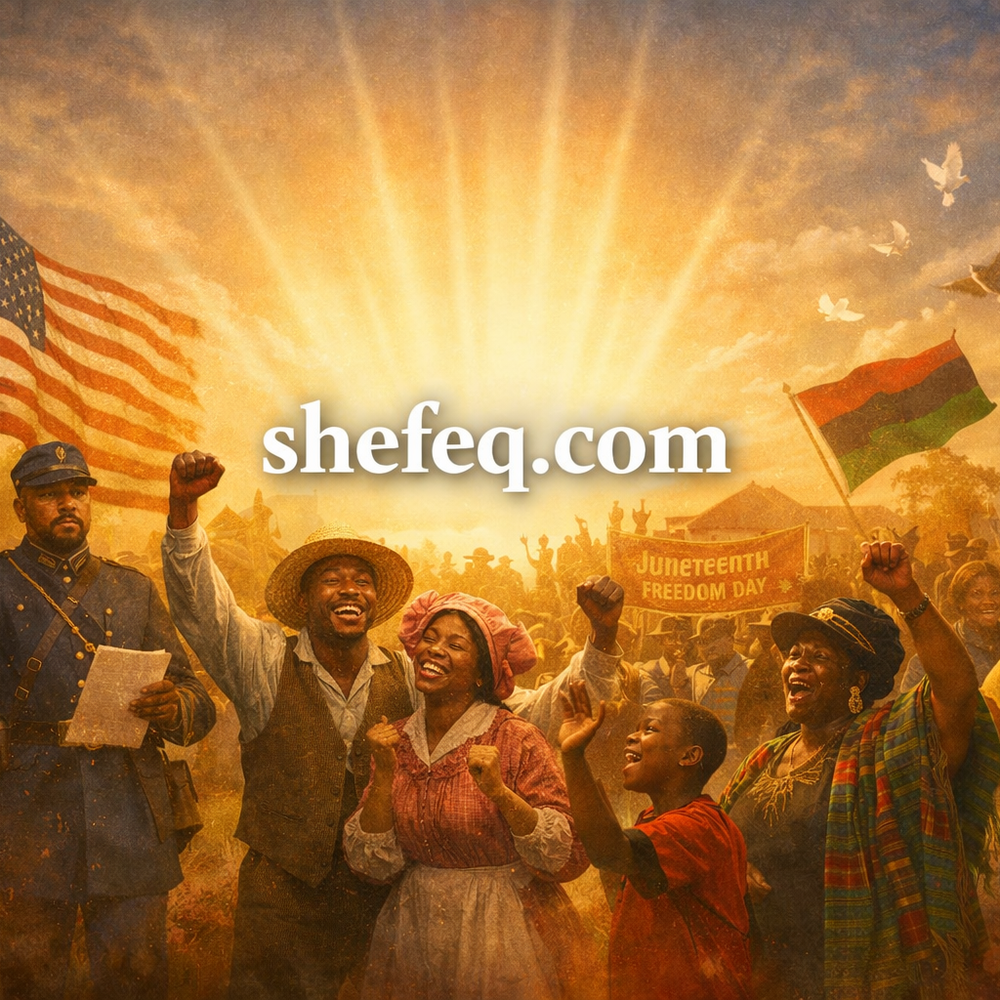
Juneteenth is an important national holiday in the history of the United States that symbolizes the factual end of slavery. It commemorates the official announcement of the abolition of slavery in the state of Texas on June 19, 1865. Juneteenth is also known as Freedom Day and Juneteenth Independence Day, and it carries deep historical and spiritual significance for African American communities.
Below are 65 interesting and important facts related to this remarkable day:
The History and Meaning of Juneteenth
1.Juneteenth is derived from the combination of the words “June” and “nineteenth.”
2.The holiday is based on the events of June 19, 1865.
3.On this date, the abolition of slavery was officially announced in the state of Texas.
4.The event primarily concerned the liberation of African Americans who had been enslaved in former Confederate territories.
5.Texas was the most remote and isolated slave state of the Confederacy.
6.The Emancipation Proclamation, which came into effect on January 1, 1863, was not immediately enforced in Texas.
7.Juneteenth became a symbol of this delayed freedom.
8.Today, Juneteenth is recognized as an official or semi-official holiday in 46 U.S. states.
9.It is traditionally celebrated through community-based, local events.
Traditions and Cultural Heritage
10.Celebrations include public readings of the Emancipation Proclamation.
11.Songs such as “Swing Low, Sweet Chariot” and “Lift Every Voice and Sing” are performed.
12.Works by renowned African American writers such as Ralph Ellison and Maya Angelou are read.
13.Rodeos, street fairs, family reunions, park celebrations, and “Miss Juneteenth” competitions are organized.
14.The Mascogo community in Coahuila, Mexico—descendants of Black Seminoles—also celebrates Juneteenth.
The Emancipation Proclamation and the Civil War
15.U.S. President Abraham Lincoln signed the Emancipation Proclamation on September 22, 1862.
16.The proclamation took effect on January 1, 1863.
17.It declared the abolition of slavery in Confederate states that were in rebellion.
18.Border states were excluded from this decree.
19.There were states where slavery continued, but which were not in rebellion.
20.These included Kentucky, Maryland, Delaware, and Missouri.
21.Virginia later formed the state of West Virginia.
22.Regions under Union control—Tennessee, lower Louisiana, and southeastern Virginia—were also excluded.
Texas and the Delay of Freedom
23.Texas was not a major battlefield during the Civil War.
24.As a result, enslaved people there were not immediately freed.
25.Many slaveholders moved to Texas to escape the war.
26.They brought enslaved people with them.
27.By the end of the Civil War, tens of thousands of enslaved people lived in Texas.
28.In 1860, thousands of enslaved people lived in Galveston and Houston.
29.Hundreds lived in other cities.
30.By 1865, approximately 250,000 enslaved people lived in Texas.
The Proclamation of Freedom
31.News of General Robert E. Lee’s surrender reached Texas in April.
32.The Trans-Mississippi Army did not surrender until June 2.
33.On June 18, 1865, Union General Gordon Granger arrived in Galveston with 2,000 soldiers.
34.The following day, he read “General Order No. 3” from the balcony of Ashton Villa.
35.This order proclaimed the complete abolition of slavery.
36.Newly freed people in Galveston celebrated joyfully in the streets.
37.In the years that followed, they struggled against systemic discrimination.
Preserving Juneteenth
38.In 1866, the first annual Juneteenth celebration was organized.
39.Due to segregation, many public parks were closed to Black communities.
40.Freed people pooled their resources to purchase land for celebrations.
41.Examples include Emancipation Park in Houston and parks in Mexia and Austin.
42.Between 1868 and 1874, the Texas Supreme Court legally affirmed the end of slavery.
The Modern Era and Revival
43.In the early 20th century, Juneteenth celebrations began to decline.
44.Jim Crow laws excluded African Americans from political participation.
45.The Great Depression accelerated migration.
46.During World War II, mass migration to the West Coast began.
47.Between 1940 and 1970, more than 5 million people left the American South.
48.Historian Isabel Wilkerson notes that Juneteenth spread across the United States through this movement.
National and Global Recognition
49The Civil Rights Movement of the 1960s revived historical memory.
50.A 1968 campaign led by Ralph Abernathy played a significant role.
51.From the 1980s onward, Juneteenth gained wider recognition.
52.In 1994, national initiatives were strengthened in New Orleans.
53.The holiday is celebrated in Paris and other international cities.
54.U.S. military bases abroad support Juneteenth events.
55.Juneteenth has appeared in popular culture.
56.The television series “Atlanta” and “Black-ish” are notable examples.
57.Artists such as Aloe Blacc, The Roots, and Fonzworth Bentley have honored Juneteenth through music.
58.The National Juneteenth Observance Foundation works to have the day recognized as an official national holiday.
59.The international celebration of Juneteenth aims to preserve the historical memory of the African diaspora.
60.African Americans living outside the United States view the day as an important means of preserving cultural identity.
61.U.S. military bases in various countries officially sponsor Juneteenth events.
62.Through media and popular culture, Juneteenth has reached a wider audience.
63.Special Juneteenth-themed episodes were aired in the series “Atlanta” (2016) and “Black-ish.”
64.In music, Aloe Blacc, The Roots, and Fonzworth Bentley have produced works reflecting the spiritual and historical weight of Juneteenth.
65The National Juneteenth Observance Foundation and similar organizations have worked for many years to secure Juneteenth’s recognition by the U.S. Congress as an official federal holiday, making a significant contribution to public awareness.
Conclusion
Juneteenth is not just a date—it is a symbol of freedom ultimately prevailing, even if delayed. This holiday, which has left a deep mark on American history, reminds us how difficult yet necessary the journey toward human rights, equality, and dignity has been.