
I. Introduction: A Mirror That Reflects More Than Appearance
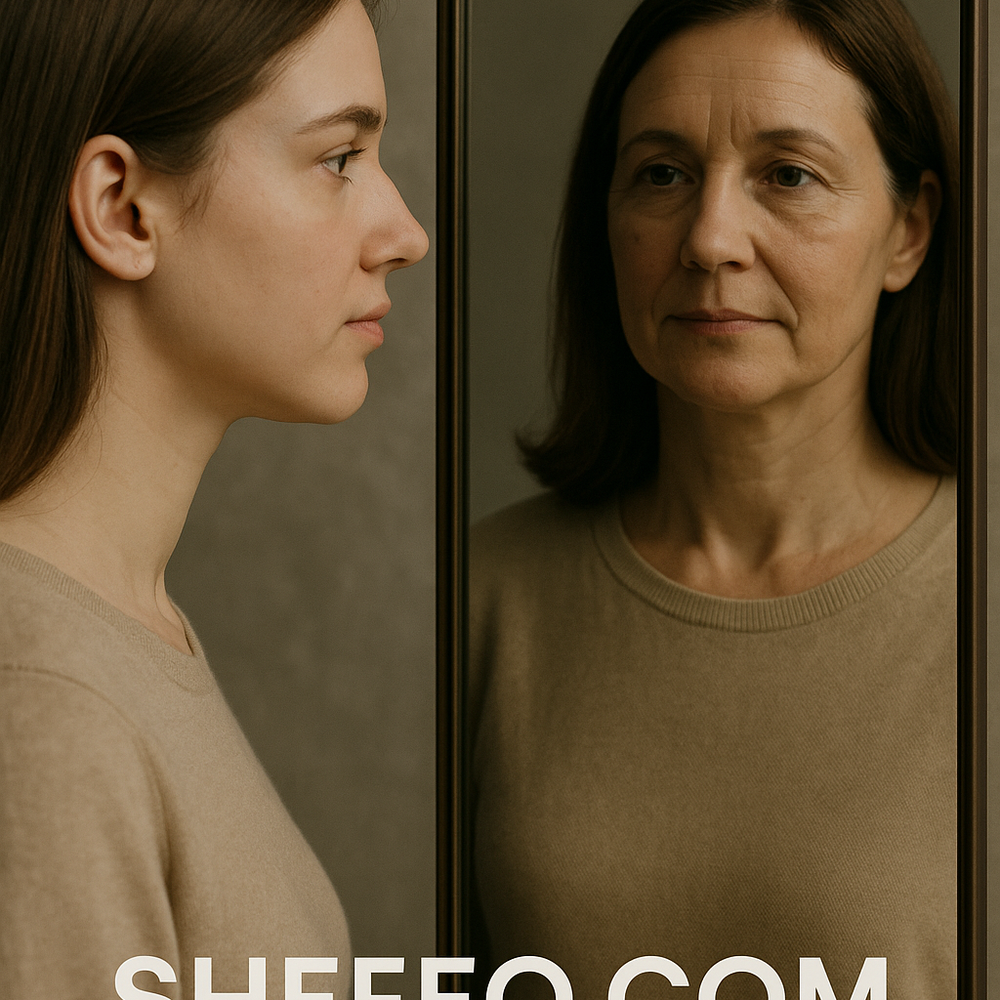
Every morning when I stand in front of the mirror, my eyes first meet my own gaze. Deep, slightly tired, yet familiar... As if this look isn’t entirely mine. Then I slowly examine the contours of my face, my cheeks, the shape of my lips. A strange feeling arises: I’m looking at a face that belongs not only to me but also to someone else. That someone is my mother. This is more than just a physical resemblance. It is finding balance in a genetic mirror.
In this article, we will explore the concept of a genetic portrait not only from a scientific perspective, but also through poetic, spiritual, and psychological lenses. There is an invisible thread between a mother and child – not just made of blood, but woven from memory, gestures, expressions, voice, and even silence.
1. What Is a Genetic Portrait?
A genetic portrait refers to how a person’s genetic material (chromosomes, DNA, and genes) is reflected in their physical appearance, behavior, and health tendencies. It’s like a biological self-portrait – eye color, hair texture, the thickness or thinness of lips, even hand gestures can be the result of inherited genetic codes.
The resemblance between a mother and child is due to the transmission of DNA. Every child inherits 23 chromosomes from the mother and 23 from the father. These chromosomes carry various genetic traits. Interestingly, beyond genetics, there is also epigenetic inheritance – how certain genes are expressed or silenced.
2. Understanding the Silent Language of Maternal Resemblance
Many women at a certain age say the same sentence: “The older I get, the more I resemble my mother.” Sometimes it's heard in the tone of voice, sometimes in the way they express anger, or even in the movement of a spoon while pouring tea. This silent language is where the genetic portrait intersects with everyday life.
It’s not just about a mirror. It’s an inner portrait – a woman living inside another woman. In facial expressions, thought patterns, even the way love is expressed.
3. Genetic Inheritance and Emotions
Science shows that genetic inheritance doesn’t apply only to the body – psychological tendencies and emotional reactions can also be partially inherited. For instance, susceptibility to depression, anxiety, or levels of empathy may have a genetic basis.
Often, a daughter subconsciously repeats the emotional experiences of her mother. The same questions that troubled the mother at age 30 may arise for the daughter at the same age. This isn’t fate repeating – it’s an inherited emotional portrait.
4. Genes and Memory – How Much Do We Carry?
Some researchers suggest that humans carry genetic memory – meaning that genetic material may transmit not only physical information but certain biological experiences too. For example, if a mother experiences intense stress during pregnancy, the stress hormones may affect fetal development and result in a more anxiety-prone personality in the child.
In this light, the bond between mother and child is like that between a tree’s root and its branches – one supports the other. This deepens the genetic portrait into something more spiritual and profound.
5. I Didn’t Choose My Mother, But I Carry Her Within Me
This may be the most emotional part. Everyone’s relationship with their mother is unique. For some, a mother is divine; for others, a heavy memory. But one way or another, every woman carries a piece of her mother within. Her traumas, joys, strengths, weaknesses... Even those emotions that were never spoken aloud.
Why can a woman be both patient and helpless with her spouse at the same time? Perhaps it’s a strategy learned from her mother – to remain silent, to adapt, to wait. And this strategy might be passed down like a genetic code.
6. Accepting the Genetic Portrait and Discovering Oneself
The most important stage is accepting this portrait. It’s more than having the same cheekbones as your mother. Your tears might be born from her laughter. You are a continuation of her in this life – not a repetition, but an ongoing imprint.
Acceptance also means making a choice. Some emotions carried by your mother might not suit you. Then, you have the right to complete or redraw that portrait. This is your power – you finish the genetic portrait.
Conclusion
When I look in the mirror, I see my mother. But at the same time, I also search for myself in that reflection. Her eyes live in mine like depth, her past casts a shadow on my present – but also brings light. A genetic portrait is not a mirror – it is a roadmap.
This face, both strange and familiar, is a bridge between me and my mother. Crossing that bridge brings me closer to her and to myself. And every time I look, I see not only my mother but also femininity, the past, and the future.
Because I am not just a daughter of a woman – I am the continuation of a legacy.
And when you look in the mirror, who do you see?
Do you find traces of your mother in yourself, or do you meet a completely different portrait?
Share your thoughts with us – every woman’s story is another mirror…