
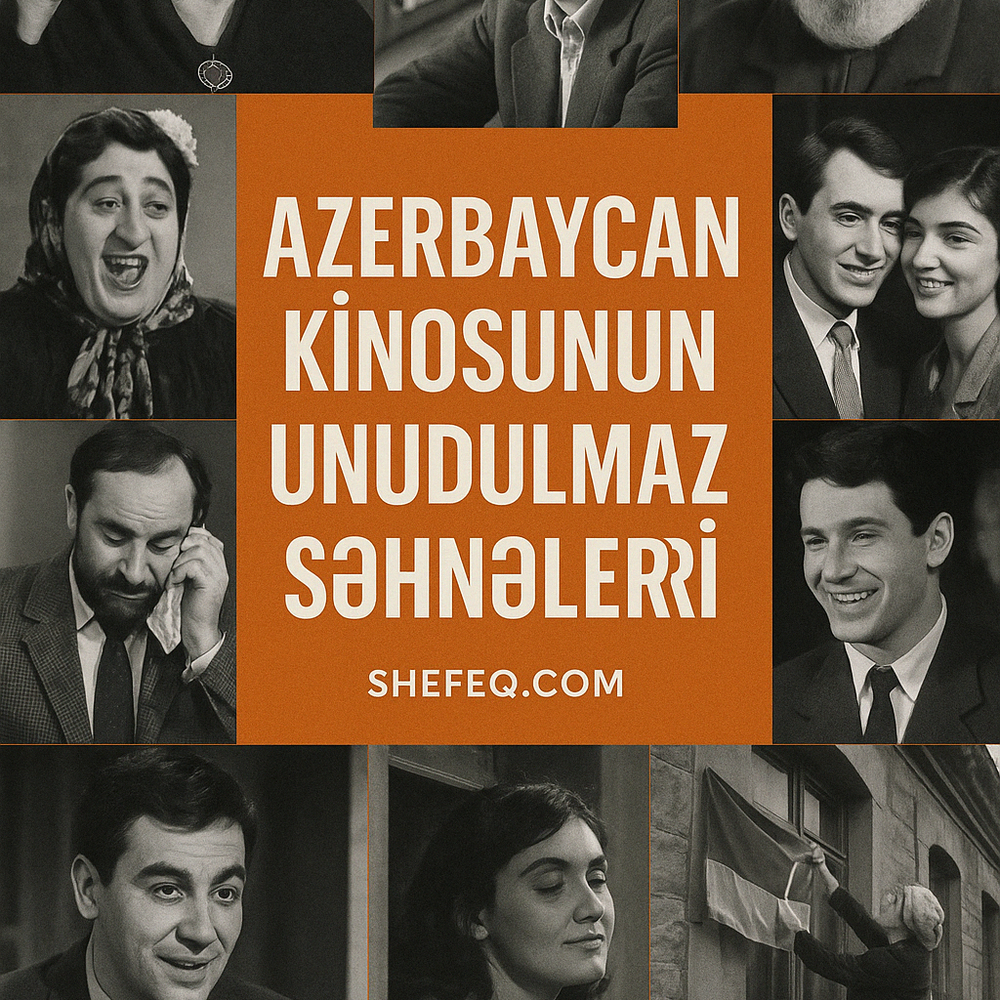
Introduction – Frames That Stop Time
Cinema is an art that can convey decades of emotion in a single glance or express an entire outcry through silence. Azerbaijani cinema is filled with such powerful moments. Unforgettable actors, haunting melodies, laughter intertwined with tears... Sometimes it’s a woman’s silence, sometimes a child’s gaze, and sometimes a man’s unshakable decision – all these have traveled across the screen and reached us today. Let’s take a journey through the most memorable scenes in the history of Azerbaijani cinema.
1. If Not That One, Then This One – Satire Hidden in Üzeyir Bey’s Laughter
Filmed in 1956, this comedy was not just for laughs. Beneath its humor lay sharp satire of the conservative norms of the time. Scenes about women’s freedom and marriage reflected bold messages for that era.
Unforgettable Scene:
Lütfəli Abdullayev as Cavadkhan singing in women’s clothes – it was both humorous and a cultural critique, each rewatch revealing new layers of meaning.
2. Mother-in-Law – A Single Word from Shahnaz Hanım Silences the House
Tamara Narimanbeyova’s portrayal of Shahnaz Hanım is still iconic. When people in Azerbaijan think “mother-in-law,” her image instantly comes to mind.
Unforgettable Scene:
Her pursed lips and commanding gaze – enough to silence everyone at home. This scene became a national inside joke and a symbol of matriarchal authority.
3. Engagement Ring – Love Beyond Material Things
This wasn’t just a love story. It delicately addressed gender roles, poverty, and family dynamics in society – as if speaking directly to every viewer.
Unforgettable Scene:
Gulzar telling her husband, “I don’t need a ring – I need you.” A line that brought many women in the audience to tears, symbolizing emotional liberation.
4. Dede Gorgud – The Triumph of Spirit and Revival of a Legend
Adapted from ancient manuscripts, this film blended history, mythology, and moral values. Produced by the Jafar Jabbarli studio, it awakened a sense of national identity in many.
Unforgettable Scene:
Dede Gorgud sitting by the fire declaring, “The word is divine” – a scene etched not just on screen, but in the hearts of a nation. A tribute to language and the power of words.
5. Road Story – A Glimpse into Everyday Reality
A simple, life-inspired tale. But director Asgar Ismayilov masterfully uncovered social realities and human connections within its simplicity.
Unforgettable Scene:
The child watching the bus, asking, “Will my father come back?” – A moment of silence and hope that stayed with audiences for years.
6. In a Southern City – Longing Painted in Black and White
Hasanaga Turabov as Ismet carried a silent sorrow that poetically expressed life itself. The visuals were modest, but the emotional depth was profound.
Unforgettable Scene:
Ismet listening to old music by the sea with closed eyes – a nostalgic portrayal of a man living through memories.
7. Interrogation – The Birth of Psychological Cinema
This film marked the beginning of psychological thrillers in Azerbaijani cinema, exploring inner fears, justice, and the battle between truth and deception.
Unforgettable Scene:
The protagonist silently wiping sweat during an interrogation – a drama conveyed purely through body language, a masterclass in acting.
8. The Last Night of Childhood – The Poetry of Youth
Firangiz Mutallimova’s role as Elchin, with her gentle smile and wide-eyed wonder, captured the spirit of transition from childhood to adulthood.
Unforgettable Scene:
The line “It’s night… and we’re no longer children,” spoken as the wind blows through an open window, inscribing the passage of time on the screen.
9. Dream – Silence That Speaks Through Color
Directed by Elchin Musaoglu, this film is a philosophical gem of modern Azerbaijani cinema, where dreams and reality merge seamlessly.
Unforgettable Scene:
The protagonist staring at his own reflection on an empty road – a visual manifestation of internal dialogue and self-confrontation.
10. Nabat – The Silent Cry of War
In her role as Nabat, Fatemeh Motamed Arya portrayed a woman who fights quietly against the backdrop of war. The story was simple, yet its humanity was profound.
Unforgettable Scene:
Nabat raising the flag in an empty village – no one is left, yet she stands as a symbol of resilience and hope.
Conclusion – Cinema Is Not the Past, But the Archive of Feelings
These scenes from Azerbaijani cinema are not just acting, music, or dialogue – they are our past, our emotions, our thoughts. The cameras may go silent, but these moments keep speaking. Every time we revisit them, they hold up a mirror to our own lives.
Because unforgettable scenes never truly disappear.
They live on – as long as we remember them.