
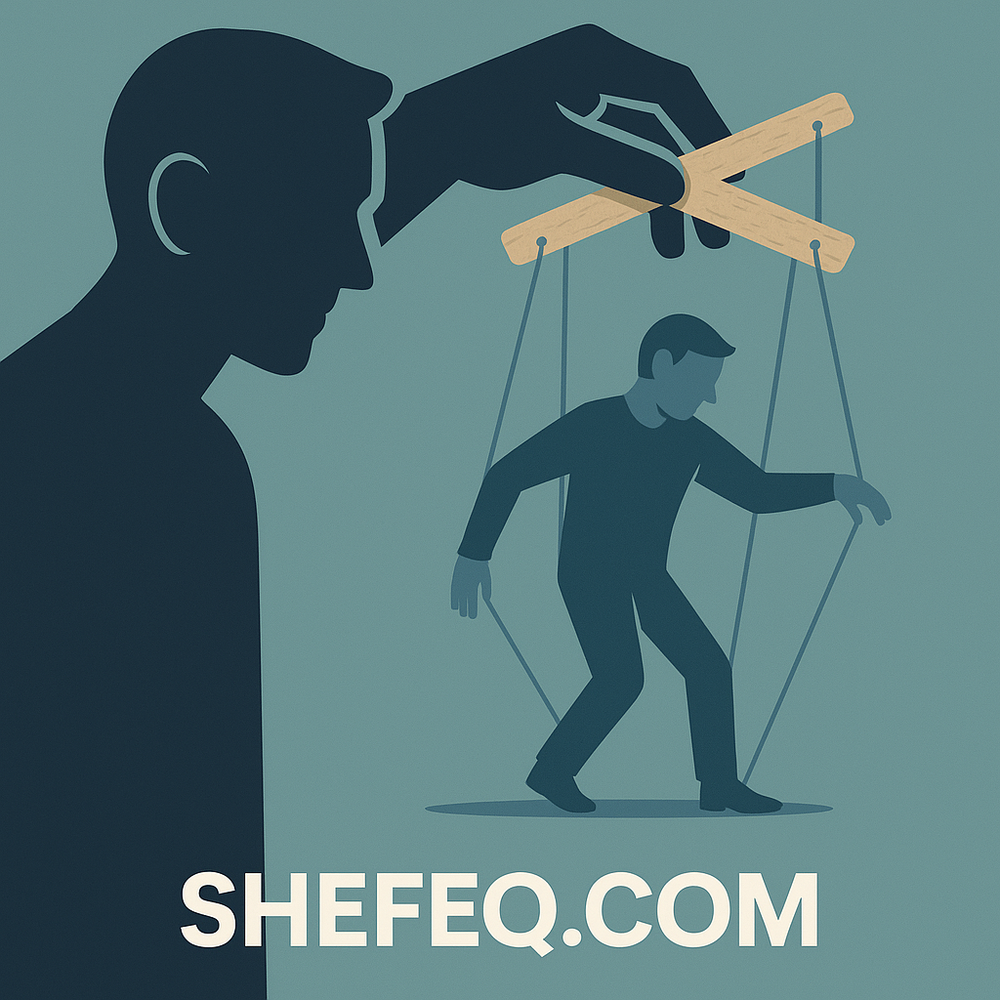
I. Introduction: Who's Really Making the Decisions—You or Someone Else?
Every day, we make choices: what to wear, whom to talk to, what to believe. But are these decisions truly our own? Or are we subtly influenced by others without even realizing it?
This article delves into the psychological foundations of manipulation, exploring the techniques used, the susceptibility of the human mind to such influences, and strategies to protect oneself from covert control.
II. What Is Manipulation?
Manipulation involves influencing someone's thoughts, emotions, or behaviors without their awareness, often for the manipulator's benefit. Unlike overt coercion, manipulation is subtle and often goes unnoticed.
Objectives:A
-
Influence decisions
-
Steer emotional responses
-
Achieve desired outcomes without direct confrontation
III. Historical Context of Manipulation
Manipulation has been present throughout history:
-
Politics: Guiding public opinion
-
Religion: Encouraging obedience
-
Advertising: Driving consumer behavior
-
Personal Relationships: Gaining emotional leverage
Often, manipulative tactics are cloaked in benevolence or concern.
IV. How Manipulation Works
Manipulation operates through:
-
Mental Vulnerabilities: Exploiting moments of doubt or indecision
-
Emotional Triggers: Leveraging feelings like fear, love, shame, or guilt
-
Unnoticed Acceptance: The target remains unaware of the influence
Cognitive Weaknesses Exploited:
-
Desire for approval
-
Conformity to group norms
-
Obedience to authority
-
Fear of loss
V. Common Manipulation Techniques
-
Gaslighting: Undermining someone's perception of reality to make them doubt themselves.
-
Guilt-Tripping: Inducing guilt to influence behavior.
-
Silent Treatment: Withdrawing communication to punish or control.
-
Withholding Information: Providing partial truths to mislead.
-
Flattery: Using excessive compliments to gain favor.
VI. Manipulation in Relationships
Family Dynamics:
-
Parents may use emotional appeals to control children's choices.
-
Partners might employ tears or silence to gain the upper hand.
Romantic Relationships:
-
Conditional expressions of love: "If you loved me, you'd..."
-
Undermining self-esteem through criticism.
Workplace Scenarios:
-
Superiors assigning extra tasks by appealing to loyalty.
-
Colleagues shifting responsibilities subtly.
VII. Manipulation in Media and Advertising
-
Creating Stereotypes: Associating products with happiness or success.
-
Urgency Tactics: "Limited time offer" to prompt quick decisions.
-
Fear Appeals: Highlighting negative outcomes to drive action.
-
Authority Endorsements: "Experts recommend..." to build trust.
VIII. Why Manipulation Is Effective
Humans are inherently social and emotional beings:
-
We seek acceptance and fear rejection.
-
Emotional responses often override rational thinking.
-
Self-doubt can make us susceptible to external influence.
IX. Profiles of Manipulators
| Type | Characteristics |
|---|---|
| Narcissist | Self-centered, lacks empathy |
| Passive-Aggressive | Indirectly expresses hostility |
| Vulnerable | Uses perceived weaknesses to elicit sympathy and control |
X. Societal Manipulation
-
Populism: Exploiting public emotions for political gain.
-
Ideological Control: Using belief systems to enforce conformity.
-
Social Media Algorithms: Curating content to shape perceptions.
XI. Recognizing Manipulation
Signs you might be manipulated:
-
Persistent feelings of guilt or obligation
-
Emotional exhaustion after interactions
-
Difficulty making decisions independently
-
Reacting emotionally without clear reasons
XII. Protecting Yourself from Manipulation
-
Self-Awareness: Understand your values and boundaries.
-
Assertiveness: Learn to say no without guilt.
-
Emotional Intelligence: Recognize and manage your emotions.
-
Critical Thinking: Question motives and seek evidence.
-
Healthy Skepticism: Don't accept information at face value.
XIII. When Manipulation Becomes Dangerous
Manipulation crosses into abuse when:
-
Personal identity is eroded
-
Decisions are consistently made to appease others
-
Emotional responses are controlled by another's actions
In such cases, professional help may be necessary.
XIV. Emotional Manipulation Disguised as Love
Statements like "I do everything for you" can be manipulative if they induce guilt or obligation. Genuine love respects autonomy and encourages mutual growth.
XV. Conclusion: Own Your Thoughts
Manipulation is not about strength but about exploiting vulnerabilities. By understanding these tactics and strengthening your self-awareness, you can reclaim control over your decisions and emotions.
Reflective Questions:
-
Have you experienced manipulation in your life?
-
How did it affect your decisions and feelings?
-
What steps can you take to reinforce your autonomy?