
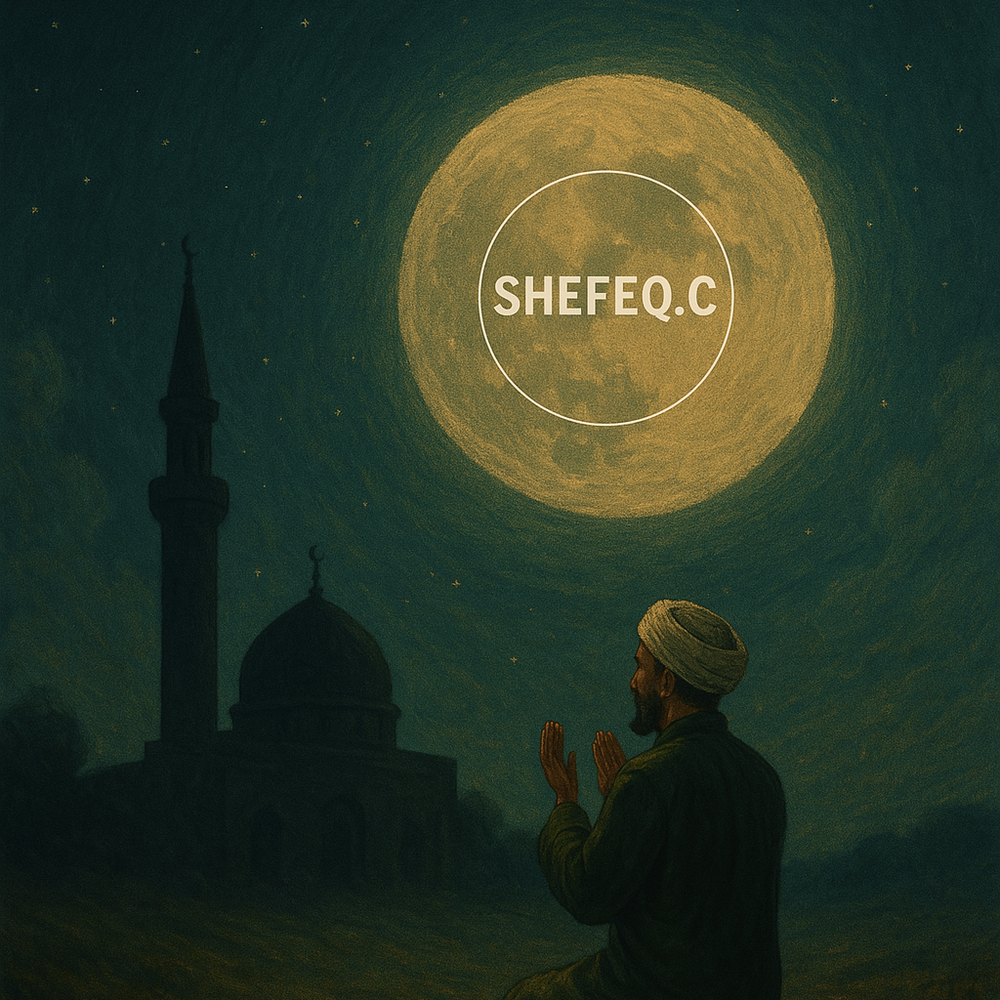
THE MYSTICAL ASCENT OF PRAYER: THE COMMAND GIVEN DURING MI'RAJ
The most fundamental act of worship in Islam, prayer, is a unique form of devotion that establishes the strongest bond between the human being and the Creator. Its origin is not only related to earthly events but is directly connected to a unique miracle associated with the divine and metaphysical realm — the Night of Mi'raj. Prayer is one of the greatest spiritual blessings brought to the ummah during the miraculous ascension of our Prophet Muhammad (peace be upon him) to the heavens.
The Mi'raj event occurred in Mecca approximately one year before the Hijrah. That night, accompanied by the angel Jibreel (peace be upon him), our Prophet was taken from Masjid al-Haram to Masjid al-Aqsa, where he led the previous prophets in prayer. This was a stage that confirmed his place in the chain of prophethood and affirmed the future responsibility of his ummah. Following this, the ascension — Mi'raj — into the heavens took place. This journey was an extraordinary manifestation both physically and spiritually. Our Prophet passed through the seven layers of heaven one by one, encountering different prophets in each level and being honored with their prayers.
Upon reaching the highest point of the heavens, a sacred place called Sidrat al-Muntaha, he arrived at a level beyond which even angels could not pass. It was here that a direct meeting between the human and the Creator took place. During this encounter, Allah the Almighty commanded our Prophet and his ummah to perform fifty prayers daily. This was a divine order meant to encourage a constant connection with Allah throughout the day, keeping the believer spiritually awake and aware at all times.
However, as the Prophet was returning with this command, he met Prophet Musa (peace be upon him). Knowing human nature, Musa expressed that such a number of prayers could be too burdensome and encouraged him to ask Allah for a reduction. Thus, the Prophet returned several times to Allah’s presence to request a decrease in the number. Eventually, the number of prayers was reduced to five — morning (Fajr), noon (Dhuhr), afternoon (Asr), evening (Maghrib), and night (Isha).
This reduction was a manifestation of Allah’s mercy and wisdom. What is most important is that Allah declared that the reward for these five prayers would be equal to that of fifty. This was a mercy shown to the ummah in both physical and spiritual terms, and at the same time, it preserved the value and significance of the act of worship.
The fact that prayer was made obligatory in the heavens sets it apart from other acts of worship. While zakat, fasting, and pilgrimage were made obligatory on Earth, prayer was commanded directly in the presence of the Divine. This shows that prayer is not only an act of worship but also a spiritual bond, a form of elevation, and a journey toward Allah. That is why prayer is called “the Mi'raj of the believer.” It is a collection of sacred moments in which a person draws spiritually close to Allah five times a day, staying alone with the Creator at different stages of life.
Prayer also brings a spiritual structure to the rhythm of a person’s daily life. Each prayer time symbolizes a specific phase:
-
Morning – a new beginning,
-
Noon – the peak of activity,
-
Afternoon – diminishing strength,
-
Evening – preparation for rest,
-
Night – contemplation and deep reflection.
Thus, prayer is not merely a form of worship but the spiritual clock of human life.
As a result, the fact that prayer was ordained during the Night of Mi'raj reveals its extraordinary spiritual essence and the place it holds in the life of every Muslim. This act of worship is not just a ritual — it is a ladder for the soul’s ascent. It purifies the believer, brings them closer to Allah, and becomes a light in the stillness of daily life.
Prayer is a gift brought from the heavens.
To appreciate it is not just to worship, but also to give thanks.
The command given on the Night of Mi'raj still silently echoes in the heart of every believer:
“Turn to your Lord, and elevate your soul…”