
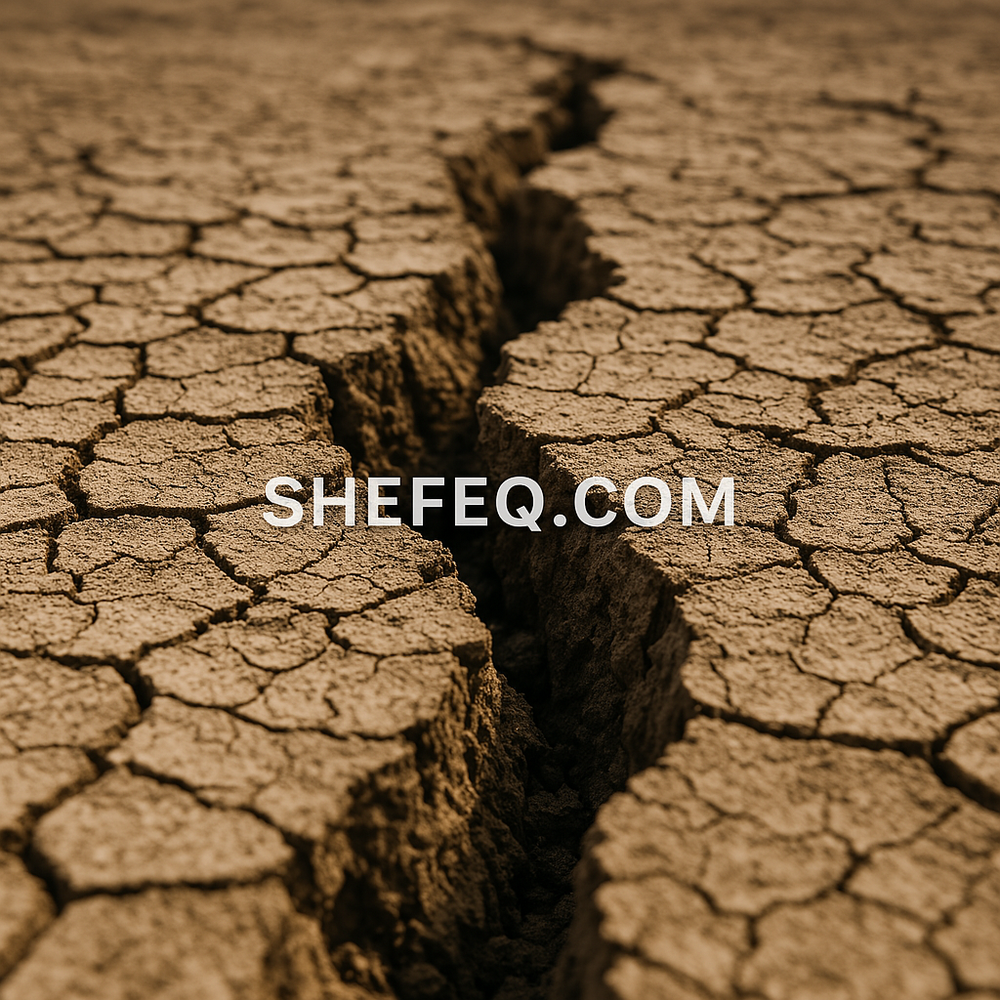
INTRODUCTION: THE RAGE BENEATH THE ROCKS Earthquakes are like moments when the Earth breathes. They are the sudden release of energy that has been quietly building up. Sometimes they merely shake a lamp; other times, they flatten cities, rewrite histories, and shatter lives.
In the past 100 years, the world has been shaken by numerous powerful earthquakes. This article explores the scientific causes, social consequences, and human stories behind these disasters.
I. What is an earthquake and why does it happen? An earthquake is a sudden and intense shaking of the Earth’s crust caused by the movement of tectonic plates. These movements occur mainly:
-
Along fault lines.
-
Energy radiates from the focus in wave form, impacting objects on the surface.
-
Earthquake strength is measured by the Richter Scale or Moment Magnitude (Mw).
II. Earthquake geography – Where do they strike most often? The most powerful and destructive earthquakes occur in the "Pacific Ring of Fire," a zone that includes:
-
Japan, Indonesia, the Philippines, the USA (California), Peru, and Chile.
Here, tectonic plates collide, causing frequent devastating quakes. Other active regions include:
-
The India-Nepal border
-
Iran and Turkey
-
Mediterranean countries like Italy and Greece
III. Earthquakes that made history – The 10 most powerful and destructive in the past century
-
Valdivia, Chile – 1960 (Mw 9.5)
-
Strongest recorded earthquake in history
-
Affected an area of 1,655 km
-
Over 6,000 deaths
-
Triggered a tsunami reaching Japan and the Philippines
-
-
Sumatra, Indonesia – 2004 (Mw 9.1)
-
Seafloor of the Indian Ocean was displaced
-
Over 230,000 deaths
-
Tsunami in 14 countries – one of the deadliest natural disasters
-
Caused by the Indian plate subducting beneath the Burma plate
-
-
Tōhoku, Japan – 2011 (Mw 9.0)
-
Over 20,000 deaths
-
Radiation leak at Fukushima nuclear plant
-
10-meter tsunami struck the coast of Japan
-
Tremendous technological and infrastructural impact
-
-
Kamchatka, Russia – 1952 (Mw 9.0)
-
Subduction of the Pacific Plate under the Eurasian Plate
-
Tsunami waves up to 20 meters high
-
Significant infrastructure damage but fewer casualties
-
-
Alaska, USA – 1964 (Mw 9.2)
-
“The Great Alaskan Earthquake”
-
Lasted more than 4 minutes
-
Massive land subsidence and landslides
-
Tsunami waves reached 25 meters
-
-
Assam, India – 1950 (Mw 8.6)
-
Altered the course of the Brahmaputra River
-
Over 1,500 deaths
-
Resulted in landslides and severe erosion
-
-
Haiti – 2010 (Mw 7.0)
-
Though moderate in magnitude, among the deadliest
-
Approximately 300,000 deaths
-
Recovery was prolonged due to weak political and economic systems
-
-
Tangshan, China – 1976 (Mw 7.5)
-
Official death toll around 242,000
-
One of the most devastating disasters in Chinese history
-
Data suppressed during the Soviet era
-
-
Mexico – 1985 (Mw 8.0)
-
Major destruction in Mexico City
-
Over 10,000 deaths
-
Led to reformation of national emergency systems
-
-
Erzincan, Turkey – 1939 (Mw 7.8)
-
Occurred in Eastern Anatolia
-
Over 30,000 deaths
-
One of the deadliest earthquakes in modern Turkish history
-
IV. Science and technology – Can earthquakes be predicted? Earthquakes cannot yet be precisely predicted, but:
-
Seismic wave monitoring systems
-
Early warning systems (Japan provides 10–30 seconds of lead time)
-
Earthquake-resistant infrastructure (reinforced designs and foundations)
These measures significantly reduce casualties and damage.
V. Social consequences – How life changes after an earthquake Earthquakes don’t just destroy buildings; they also shake societies:
-
Homelessness and displacement
-
Collapse of public services (water, power, healthcare)
-
Psychological trauma and grief
-
Migration waves
Recovery can take years – and in some cases, never fully happens.
CONCLUSION: The Earth Still Breathes Earthquakes are the voice of the planet's internal energy balance. We can’t stop them, but we can be prepared, informed, and respectful toward the natural world.
We live atop fragile tectonic plates — and they can tremble at any moment.