
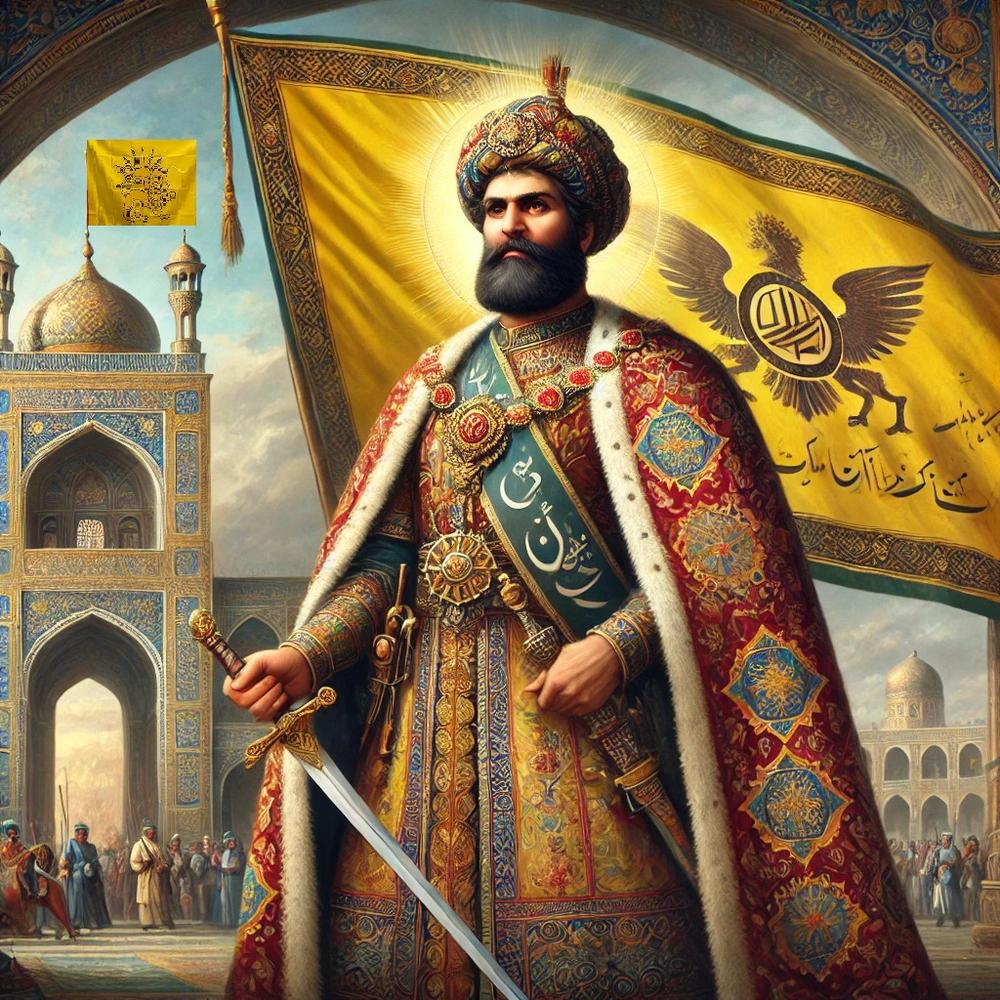
A Man Who Changed an Era: Shah Ismail Khatai
Shah Ismail Khatai is one of the greatest rulers who left a lasting mark on the history of Azerbaijan and the Middle East. By founding the Safavid state, he established a new political and religious order in these lands, declaring Shiism the official state religion and thus strengthening his empire. Shah Ismail was not only a warrior but also one of the most powerful political figures of his time. This article explores his life, political and military achievements, religious policies, and his influence on culture and literature in detail.
A Fate Written by the Sword
Shah Ismail was born in 1487 in Ardabil, into a family of Safavid sheikhs. His grandfather Sheikh Junayd and father Sheikh Heydar were leaders of the Safavid order, paving the way for Ismail’s great ambitions. After his father's death in battle, Ismail spent his youth in hiding from his enemies. However, in 1499, he returned to the political scene and began taking the first steps toward building a great state. With the support of the Qizilbash followers, he led campaigns across various regions and quickly became known as a powerful leader.
A Ruler Born on the Battlefield
In 1501, Ismail captured Tabriz, declared himself Shah, and laid the foundation of the Safavid state. He soon defeated the Shirvanshah dynasty and annexed their lands into his empire. Later, he carried out successful campaigns against the Aq Qoyunlu state, further consolidating his power in the region.
One of the most significant battles of his reign was the Battle of Chaldiran in 1514, against Ottoman Sultan Selim I. Although the Ottomans were victorious, the Safavid state did not collapse. Shah Ismail learned from this defeat, focused on strengthening the structure of the state, implemented internal reforms, and worked on new defense strategies.
The Power of Belief: The Ideological Fortress of the Safavids
One of Shah Ismail’s most historically significant acts was declaring Shiism the official religion of the state. This caused revolutionary changes in the religious and political structure of the region. He took extensive measures to spread Shiite Islam and organized the state apparatus based on this belief. As a result, the Safavids entered into a long-term sectarian and political rivalry with the Ottoman Empire. His religious policy played a decisive role in shaping the current cultural and political landscape of both Azerbaijan and Iran.
The Art of the Pen and the Sword
Shah Ismail was not only a great commander and statesman but also a gifted poet. Under the pen name Khatai, he wrote poems in the Azerbaijani language—beautiful ghazals, couplets, and rubaiyat. His literary works made a significant contribution to the cultural heritage of the time and led to the wider use of Azerbaijani Turkish in literature. His poetry reflected both his warrior spirit and mystical worldview. His works also served as inspiration for many poets of his era.
An Empire on the Path to Eternity
The Safavid state, founded by Shah Ismail, continued to exist long after his death and left a deep mark on Azerbaijani history. He strengthened the administrative system and solidified his empire with political and military strategies. Under the Safavids, Azerbaijan became one of the most powerful states in the region, experiencing a period of economic and cultural prosperity.
The Death of Shah Ismail and His Final Days
Shah Ismail Khatai died in 1524 at the age of 37. Throughout his life, he had led numerous campaigns, wars, and efforts to build a state. After his defeat at Chaldiran, he suffered from psychological and physical exhaustion. Although he was known as a majestic ruler on the battlefield, he faced serious health issues in his final years.
His death marked the beginning of a new phase in the Safavid dynasty. His son, Tahmasp I, succeeded him and continued the empire. With Shah Ismail’s death, an era ended, but the legacy he left became an inseparable part of the Safavid state and Azerbaijani history. He is remembered not only as a ruler but also as a prominent cultural figure.
A Legend Living in the Dust of Time
Shah Ismail Khatai will be remembered forever not only as a ruler but also as an ideologue, poet, and cultural icon. The state he established, the religious and political reforms he implemented, and the literary contributions he made are still cherished today. By uniting the power of the sword and the pen, he unified his people and strengthened their national identity. For the Azerbaijani people, he is more than a ruler—he is an integral part of their national heritage. His name lives not only in history books but also in the memory and hearts of the people.
A Saying by Khatai
The world is mine, the world is yours, yet it belongs to none.
No one stays, no one remains — the world is but a fleeting illusion.