
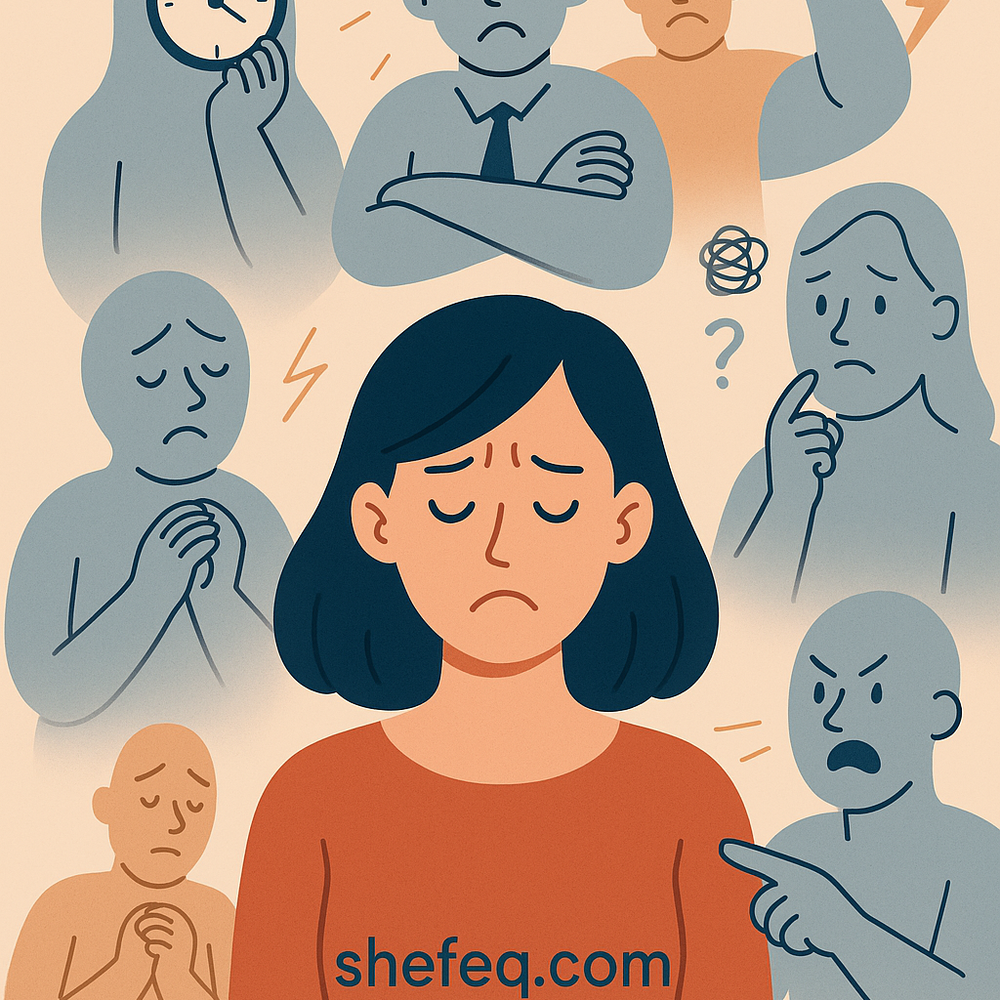
Sometimes, the cause of stress isn’t external — it’s internal.
We’ve all felt stressed at work — that’s no secret.
However, this stress often doesn’t come from the job itself, but from the collision between personal tensions we carry from our private lives and the pressures we face at work.
Work overload, instability, and relationships with supervisors and colleagues — all these factors don’t exist in a vacuum; they’re deeply connected to other areas of our lives.
One of the least considered factors is how our personality types contribute to stress.
Having a “Type A” personality or a generally pessimistic mindset can make us more vulnerable to stress.
But often, this influence operates in subtle, invisible ways.
The late Mary Dempsey and Rene Tihista explored this connection in their book “Stressful Personalities: A Look at Ourselves.”
The book was based on Dempsey’s years of conducting stress-management seminars and identifies seven personality types that tend to amplify stress.
Her model isn’t a formal scientific theory, but rather a simple, practical, and thought-provoking way to understand the relationship between personality and stress.
1. The Pleasers
These individuals want everyone to be happy.
They take on extra responsibilities, protect coworkers, and put the team’s success above their own needs.
However, over time, this self-sacrifice leads to exhaustion, frustration, and a sense of being unappreciated.
2. The Internal Timekeepers
They love responsibility and productivity.
But they often take on too many tasks, leaving themselves drained and anxious.
Unlike the Pleasers, their motivation isn’t to make others happy — it’s to feel useful, competent, and in control.
3. The Strivers
Ambitious and competitive, these people constantly compare themselves to others and aim to be the best.
This drive for perfection often leads to chronic tension, burnout, and even envy toward others’ success.
4. The Easy-Goers (or Inner Johns)
These individuals underestimate the real difficulty of tasks and tend to procrastinate.
Because they avoid conflict, they often delay addressing problems until it’s too late — making situations worse.
5. The Critical Judges
They are their own harshest critics.
They set very high personal standards and can’t forgive themselves for even small mistakes.
Such perfectionism often results in self-doubt and emotional exhaustion.
6. The Worriers
They are constantly preoccupied with potential problems — many of which may never happen.
They fear uncertainty, so they prepare multiple backup plans (A, B, and C), but this overplanning prevents them from solving actual issues in the present.
7. The Sabertooths
They respond to stress with anger.
Their aggressive reactions spread negative energy to coworkers and can poison the work atmosphere.
Just a few such outbursts can create lasting tension across an entire team.
Do you recognize yourself in any of these descriptions?
Dempsey’s “7 Stress Personalities” model was designed to explain stress at work, but its principles apply to all areas of life — from family relationships to education and social dynamics.
Each of us knows “Pleasers,” “Worriers,” or “Sabertooths” — and sometimes, we might recognize one of these types within ourselves.
Conclusion
Stress is not always a product of events — sometimes it’s a reflection of who we are.
Recognizing your personality type is the first step toward change.
Because learning to manage stress often begins with one crucial act — understanding yourself.