
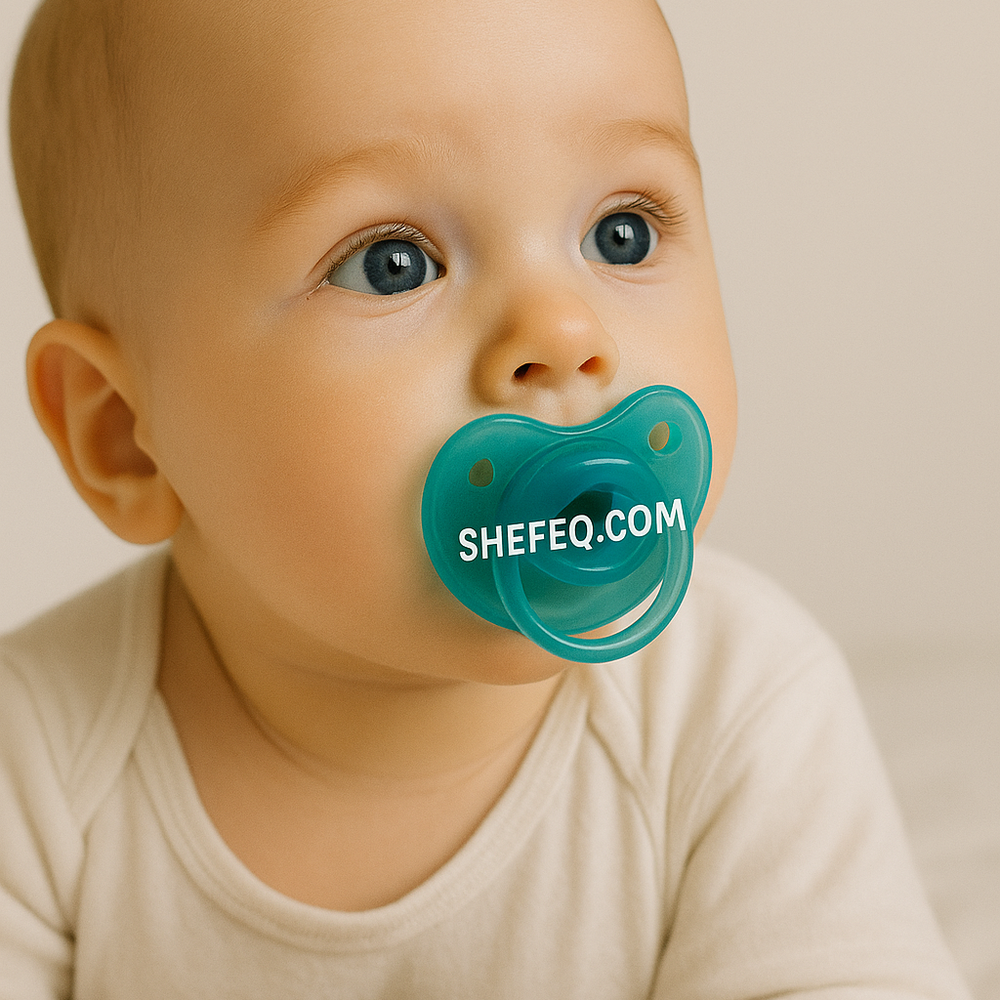
Introduction: The Symbolic Role of the Pacifier
The pacifier is often the second "soothing tool" parents offer their baby after breast milk. In many families, it’s the first solution considered to stop a baby from crying — even before a diaper change. But the question remains: Is the pacifier truly beneficial for babies? Or does it pose risks for future dental health, speech, and emotional development?
This article explores the history of the pacifier, its benefits and risks, expert perspectives around the world, parental experiences, and recommended guidelines for proper use.
1. The History and Psychological Meaning of the Pacifier
The use of pacifiers dates back to the 16th century. Back then, infants were given pieces of wood or bone soaked in sweet substances. In the 19th century, the discovery of rubber led to safer models.
The pacifier meets the innate need to soothe through sucking — one of the most primitive reflexes of the human being. This reflex, present from birth, helps reduce a baby’s sense of danger, pain, and discomfort.
2. The Benefits of Pacifiers – What Experts Say
a) Calming Effect
A pacifier can be useful for short-term soothing. When the baby is tired, hungry, upset, or just wants to be held, the sucking motion helps calm the nervous system.
b) Aiding Sleep
Some studies show that pacifiers help babies fall asleep more easily. As the baby’s mouth muscles work, melatonin production increases.
c) Reducing Acute Stress
During injections, medical exams, or other painful procedures, a pacifier can reduce the perception of pain.
d) Possible Prevention of Sudden Infant Death Syndrome (SIDS)
According to the American Academy of Pediatrics (AAP), pacifier use may reduce the risk of SIDS because it helps keep the tongue from blocking the airway during sleep.
3. The Risks of Pacifiers – Thinking Ahead
a) Impact on Dental Development
Prolonged use (especially after age 2) may lead to misalignment of the upper and lower jaws, causing the front teeth to protrude and the lower jaw to recede.
b) Delay in Speech Development
Frequent daily use can weaken tongue muscles, delay consonant pronunciation, and reduce overall speech flexibility.
c) Interference with Breastfeeding
If a pacifier replaces the breast, the baby may lose interest in nursing, leading to reduced milk production.
d) Emotional Dependence
A baby who cannot fall asleep or calm down without a pacifier may struggle to develop emotional self-regulation skills later in life.
e) Infection Risk
If not cleaned properly, a pacifier can increase the risk of oral thrush, throat infections, and ear infections.
4. Expert Opinions and International Guidelines
American Academy of Pediatrics (AAP):
-
Recommends pacifier use up to 1 year of age.
-
Suggests gradually weaning after 2 years.
-
Advises offering the pacifier only after breastfeeding is well established (usually after 3–4 weeks).
World Health Organization (WHO):
-
Does not recommend pacifier use in the first 6 months due to possible interference with breastfeeding.
European Academy of Pediatric Dentistry:
-
If used, pacifiers should be orthodontic, ventilated, and used in moderation.
5. 10 Golden Rules for Safe Pacifier Use
-
Offer the pacifier only after breastfeeding is well established.
-
Use it only for calming purposes — not by default.
-
Choose an intact, orthodontic-shaped pacifier.
-
Replace it every 2–4 weeks.
-
Never dip it in sweet liquids.
-
Remove the pacifier gently once the baby falls asleep.
-
Use alternatives during the day — songs, cuddles, touch.
-
Sterilize regularly by boiling or using a sterilizer.
-
Begin weaning by age 2.
-
Offer emotional alternatives when the child asks for the pacifier.
6. Parent Questions and Real-Life Scenarios
Q: “If we don’t give a pacifier, our baby cries a lot at night. What should we do?”
A: Start by establishing a consistent sleep routine. Try alternatives like a stuffed animal, light rocking, or a soft lullaby.
Q: “Can we suddenly take the pacifier away in one day?”
A: Sudden removal may cause emotional distress. It’s better to reduce daytime use first, then phase out nighttime use.
Q: “Does the pacifier help with teething?”
A: While it may soothe the gums slightly, cold teething rings are more effective and safer.
7. Is It Possible to Raise a Baby Without a Pacifier?
Absolutely. To do so:
-
Build a strong emotional bond with the baby.
-
Use cuddles, eye contact, lullabies, touch, and calm words — these are the most powerful natural soothers.
-
Don’t respond to every cry with food or a pacifier; instead, seek to understand the cause.
Babies raised without pacifiers tend to learn self-regulation, emotional awareness, and self-expression earlier.
8. Conclusion: Balance of Benefit and the Parent’s Role
The pacifier is neither a devil nor an angel — it's simply a tool. What matters is how, when, and how much it’s used. As parents, we decide: will this tool support emotional well-being or create dependence?
When used properly and in moderation, a pacifier can be a source of comfort in a baby’s life. But like any tool, it cannot replace love, attention, or meaningful interaction.
What do you think?
What has your experience with pacifiers been like?
If your child grew up without one, what methods did you use to soothe them?
What was the most difficult moment you had related to pacifier use?
Share your thoughts — your words might inspire another parent.