
Introduction
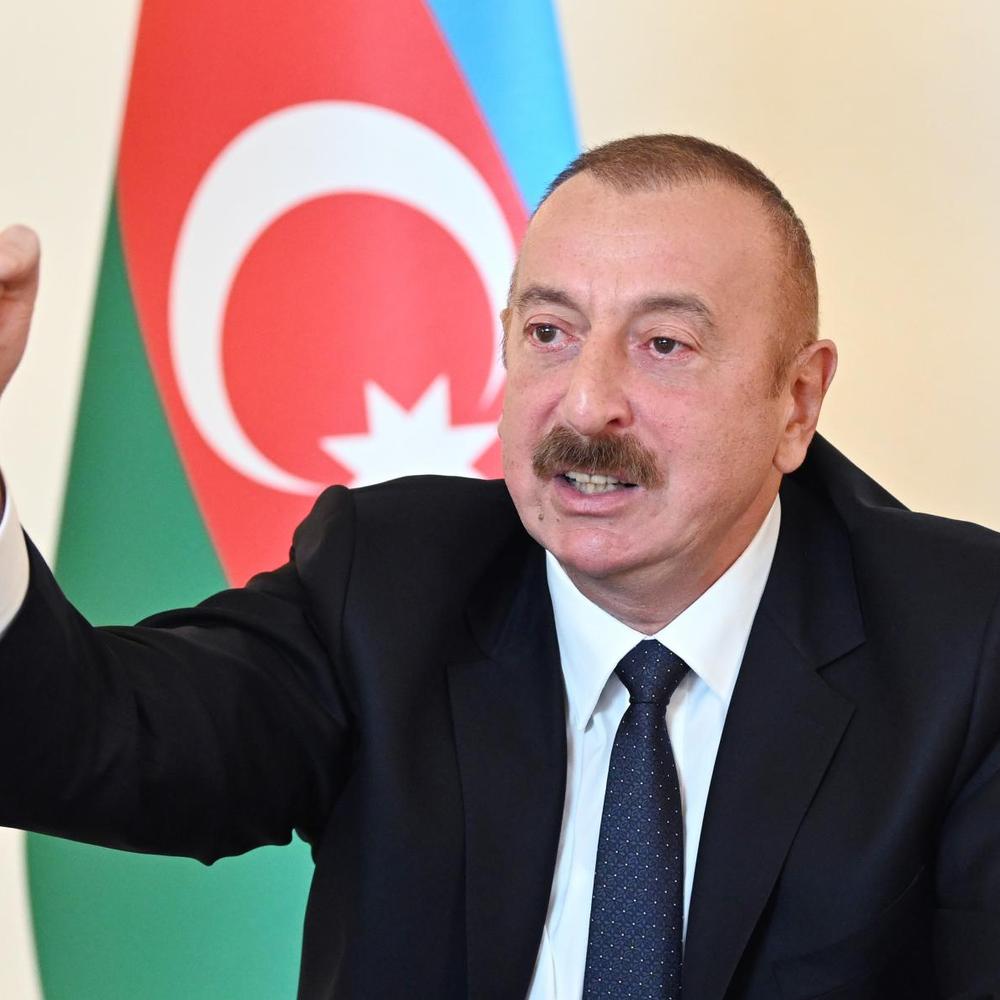
Among the prominent figures in modern Azerbaijani history, President Ilham Heydar oglu Aliyev holds a special place. He is a political leader with invaluable contributions to the development of the country, strengthening its international reputation, defending national interests, and liberating occupied territories. This article analyzes Ilham Aliyev’s life, political career, achievements, and strategies for Azerbaijan's future.
Chapter I: Life and Education
Ilham Aliyev was born on December 24, 1961, in Baku. His father, Heydar Aliyev, was the national leader of Azerbaijan. Growing up in such a family, where education, culture, and statehood were deeply valued, significantly shaped Ilham Aliyev's worldview.
In 1977, he graduated from high school in Baku and entered the Moscow State Institute of International Relations (MGIMO), completing his degree with distinction in 1982. He then pursued academic work as a postgraduate student at the same institute and was awarded the degree of Candidate of Historical Sciences.
Chapter II: Career and Entry into Politics
After the collapse of the Soviet Union in 1991, Ilham Aliyev was engaged in private sector business. However, from 1994, he returned to public service and began supporting Heydar Aliyev’s political agenda.
In 1995, he was elected to the Milli Majlis (National Assembly), and since 1997, he has served as the President of the National Olympic Committee. Under his leadership, Azerbaijani sports achieved significant international success.
In August 2003, he was appointed Prime Minister of the Republic of Azerbaijan, and in October of the same year, he was elected President with a large majority.
Chapter III: Economic Development under Ilham Aliyev
During Ilham Aliyev's presidency, Azerbaijan experienced rapid economic growth. Continuing the oil strategy, attracting foreign investments—especially in the energy sector—and implementing international projects strengthened the country's economic independence.
Key achievements include:
-
Launch of the Baku-Tbilisi-Ceyhan (BTC) oil pipeline
-
Implementation of the Southern Gas Corridor
-
SOCAR’s expansion into global markets
-
Diversification of the economy and development of non-oil sectors
-
Promotion of Small and Medium Enterprises (SMEs)
Thanks to the State Programs on the Socio-Economic Development of the Regions launched in 2004, infrastructure has been upgraded across all regions of Azerbaijan, new jobs created, and citizens’ welfare improved.
Chapter IV: Foreign Policy and Diplomatic Success
Ilham Aliyev’s foreign policy is based on a balanced and pragmatic approach. Azerbaijan has developed mutually beneficial relations with both the East and the West, establishing itself as an independent actor on the global stage.
Key achievements:
-
Chairmanship of the Non-Aligned Movement (2019–2023)
-
Partnership agreements with the European Union
-
Strategic cooperation with Russia, Turkey, Iran, and China
-
Active participation in international organizations such as the UN, OSCE, and OIC
Azerbaijan’s growing international reputation and its initiatives for intercultural dialogue (e.g., the Baku Humanitarian Forum and Intercultural Dialogue Forums) are notable highlights of this period.
Chapter V: The Karabakh Conflict and the 44-Day Patriotic War
One of the greatest achievements was the liberation of territories occupied for nearly 30 years, through the 44-day Patriotic War (September 27 – November 10, 2020). Under Ilham Aliyev’s leadership, this historic victory was achieved.
The liberation of Shusha marked the turning point in the war, leading to Armenia signing a capitulation agreement.
This triumph was not only about restoring territorial integrity but also reviving national pride, honoring the memory of martyrs, and fulfilling the hopes of displaced persons.
Chapter VI: Post-War Reconstruction
Following the war, Ilham Aliyev declared a new phase for Azerbaijan: recovery, reconstruction, and reintegration. Under his directive, rapid infrastructure projects are underway in Karabakh and East Zangezur, aligned with the “smart village” and “smart city” concepts.
Key projects:
-
Airports in Fuzuli, Zangilan, and Lachin
-
Urban development projects in Shusha, Aghdam, and Jabrayil
-
The Great Return Program to resettle displaced populations
Chapter VII: Social Policy and Human Capital Development
President Ilham Aliyev consistently emphasizes that “the future of Azerbaijan lies in educated, patriotic youth.” As such, significant attention has been paid to education, healthcare, and social protection.
Key achievements:
-
Construction of modern schools and hospitals
-
Government programs for youth to study abroad
-
Regular increases in wages and pensions
-
Expansion of social packages
-
Digitization of public services (e.g., ASAN service)
Chapter VIII: Family Life and Personal Traits
In 1983, Ilham Aliyev married Mehriban Aliyeva, who currently serves as Azerbaijan’s First Vice-President and is known for her humanitarian work. They have three children.
President Ilham Aliyev is known as a serious, composed, analytical leader who has earned the trust of his people. His decisive and effective leadership in military, diplomatic, and social spheres makes him a model of modern governance.
Conclusion
Ilham Aliyev has gone down in history as the leader who reinforced Azerbaijan’s independence, restored its territorial integrity, and ensured the welfare of its people. His policies are built on sustainable development and the defense of national interests.
Today, Azerbaijan plays a key role in both regional and global processes as the leading country in the South Caucasus. The architect of this successful path is Ilham Aliyev—President of the Republic of Azerbaijan, Commander-in-Chief, and patriotic leader.