
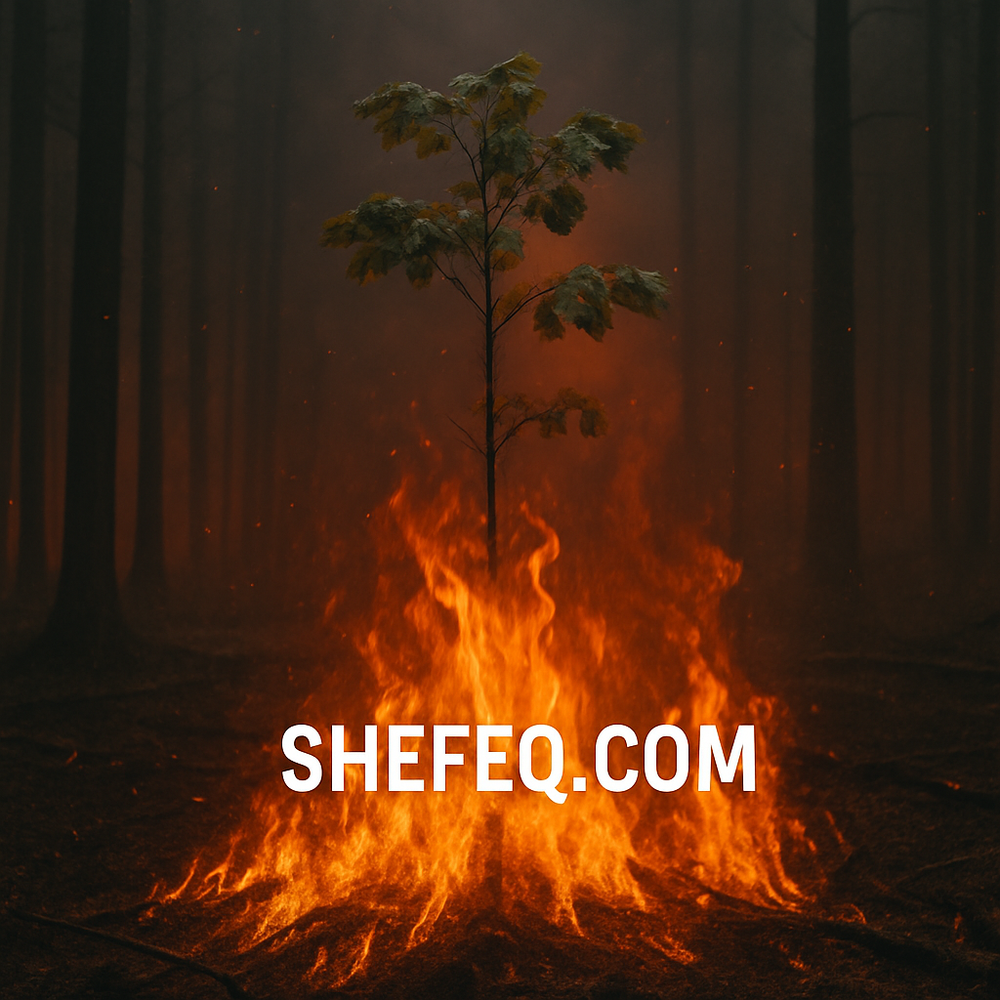
I. Introduction: Is It Just Trees That Burn?
Forest fires are spreading wider and faster across the globe every year. But what turns to ash in the flames is not just the trees — human emotions slowly burn too. These disasters are often not just natural occurrences but results of neglect, exploitation, and irresponsibility.
II. A Burning Green World: Figures and Facts
According to 2023 reports, more than 60 million hectares of forest were burned worldwide. Fires in Australia, California, the Amazon, and Siberia have disrupted not only local but also global ecological balance. Roughly 90% of forest fires are directly linked to human activity: careless campfires, trash burning, or deliberately set fires for land use.
The consequences of these disasters go beyond ecological loss — they trigger social, economic, and cultural crises. Forests are the lungs of our planet, and by letting them burn, we are turning our future to smoke and ashes.
III. Ecosystem Collapse: Nature Is Not Silent
Forests are not just trees — they are home to thousands of species.
-
Fires decrease biodiversity — animals die or are forced to migrate.
-
The upper layer of soil loses its ability to retain water, increasing erosion and landslides.
-
Massive carbon emissions into the atmosphere accelerate climate change.
A fire doesn't just destroy one area — it disrupts everything connected to it: water systems, agriculture, and even the human soul.
IV. What Remains After Fire: Life Turned to Ash
-
Local communities lose homes, farms, and memories.
-
Most of the population either migrates or falls into poverty.
-
Those working in forestry become unemployed, and tourism collapses.
-
Children are cut off from education; families lose access to social security.
In the new reality shaped by these disasters, people suffer psychological trauma — living with fear, loss, and uncertainty about the future.
V. Azerbaijan’s Experience: Protect or Ignore?
In recent years, major wildfires have been recorded in Quba, Zagatala, Lerik, and Tovuz regions of Azerbaijan. Most were caused not by nature but by human negligence.
-
Mountainous areas lack the technical equipment to fight fires.
-
In some areas, forests are intentionally set on fire by locals for agriculture or construction.
-
Public awareness campaigns are weak, and fines are largely ineffective.
Forests in Azerbaijan regulate the climate and protect water resources. Their loss poses a serious threat to the country's overall ecological security.
VI. There Is a Cure: Fires Can Be Stopped
-
Increase technical equipment for forest services.
-
Establish voluntary monitoring and early-warning systems.
-
Strengthen public education — in schools, rural areas, and online platforms.
-
Toughen laws and ensure enforcement.
-
Use new technologies: thermal drones, sensor networks.
At the same time, everyone bears individual responsibility. A single cigarette butt or unattended fire can destroy an entire forest — and with it, a future.
VII. Epilogue: Stories Lost in Flames
When a forest burns, it’s not only the trees. The squirrel hiding beneath, the bird nesting on a branch, the young sapling growing underneath — all are turned to ash. But the most terrifying part is humanity’s indifferent gaze, its silent complicity.
A burning forest is a warning about the future. If we don’t put out the fire now, tomorrow we may have no cool air to breathe, no trees to shelter us.
A Question to the Reader:
When was the last time you looked at a forest — did you see greenery or forgotten responsibility? If you see your own life reflected in a burning tree, maybe it’s time to raise your voice.
Share your thoughts — Shefeq.com hears nature’s silent call.