
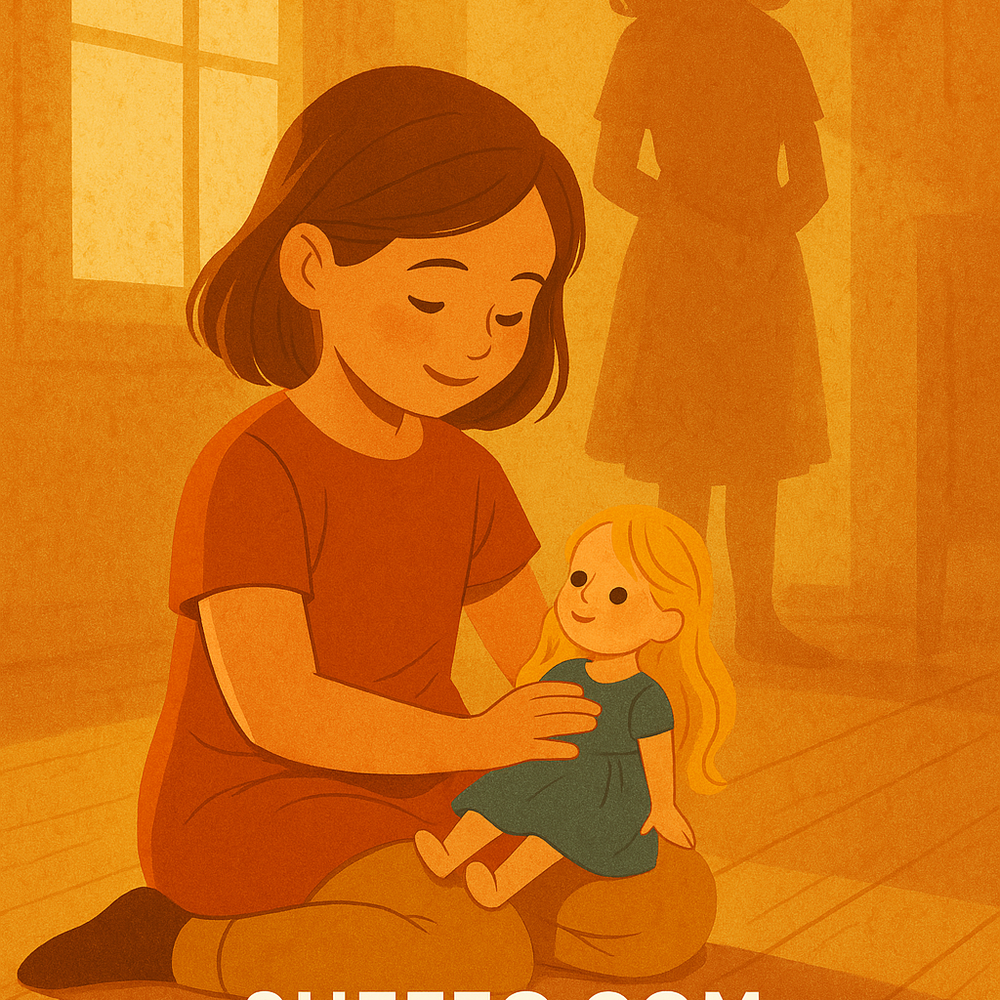
A Game That Begins with a Doll – How a Girl’s Inner World is Formed
Introduction: There is no girl who doesn’t play — but the language of her play changes
In childhood, toys are not just plastic objects — they are symbols through which a girl begins to construct her inner world.
Before she plays with dolls, tiny houses, or kitchen sets, she builds a simulation of life inside herself.
Every game she plays, every sentence she says, even the way she looks at her doll — is a mirror of her soul.
1. For a girl, a toy is her first experience of relationship
– Being a mother to a doll
– Feeding a teddy bear
– Cooking in a tiny kitchen
These are not just games. They are:
-
The beginning of a sense of responsibility
-
The development of a nurturing instinct
-
The ability to put herself in someone else’s place
Looking at her doll, the girl tests her future “self.”
2. A girl speaks through play
Sometimes a child expresses what she cannot say in words through her toys.
– If she speaks harshly to a doll
– If she yells at a bear
– If she silently hugs her doll and cries
It is a reflection of her emotional world. Toys become the language of her feelings.
3. Through games, the girl moves toward womanhood
In traditional societies, girls are mostly given games like “playing house” or “mom and baby.”
These serve as early psychological training for her feminine roles.
Through play, she learns:
-
To nurture
-
To practice patience
-
To form future identities as a “mother,” “sister,” or “friend”
4. Toys represent the forms of strength a girl chooses
The toy a girl picks reveals what kind of strength she is seeking within:
-
Doll – the power of love and care
-
Doctor kit – the desire to heal
-
Computer toy – knowledge and control
-
Sword or hero – the wish to protect and be protected
These choices reflect her fears and sense of security.
5. With toys, the girl builds her future dreams
When asked, “What do you want to be when you grow up?” — her answer is often hidden in her play.
If she takes her doll to school — she wants to be a teacher.
If her dolls get sick and she heals them — she dreams of being a doctor.
If she reads to them — she wants to be a writer or storyteller.
The dreams of a girl speak through the silence of her toys.
6. Toys are a way for the girl to understand herself
While playing, she may feel:
-
Strong
-
Weak
-
Loved
-
Lonely
Toys are psychological mirrors. The way she treats her doll often shows how she treats herself.
7. Toys offer clues to her feminine identity
The games a girl plays shape how she accepts and expresses her identity as a woman.
Through play, she learns:
-
How to live with feminine strength
-
Whether a woman can be both protector and creator
-
How to express emotions
These games are the first drafts of her womanhood script.
8. Social influence and gendered toys — a search for balance
Unfortunately, many toys come loaded with gendered codes:
– For girls: “home,” “beauty,” “motherhood”
– For boys: “war,” “technology,” “heroism”
This division sometimes distances girls from creativity and a sense of strength.
That’s why free choice of toys helps form a free internal world.
9. A girl’s solitary games — her inner dialogue
Sometimes a girl plays alone. She talks to her doll, plays music, tells herself a story.
This is her:
-
Self-discovery experience
-
Conversation with her inner world
-
Path to emotional balance
She may appear quiet while playing — but there is life inside her.
10. A girl without toys can become a woman without words
If a girl grows up without play:
-
Her inner world may shut down before maturing
-
Her ability to express feelings may weaken
-
She may seek womanhood only through societal roles
That’s why a girl’s right to play is the greatest need before discipline.
11. Her toys change, but her needs remain
In childhood — a doll
In school — a diary
As a teen — a book
In youth — a phone…
But a girl always seeks a “safe space.” The toys may change, but the goal stays the same:
-
To express herself
-
To explore love
-
To test her future
These evolving toys are steps in her inner journey.
12. Parents — mirrors of toy-based relationships
A girl carries her parents’ relationship into her play:
– When she talks to her doll — she reflects her mother’s behavior
– When she argues with her doll — she copies family tension
– When she strokes her doll — maybe she’s fulfilling her own need for affection
That’s why a child’s play is often seen as the emotional report card of the home.
13. Toys may break one day — but dreams remain
The girl grows up. Dolls are thrown away, teddy bears are forgotten.
But the dreams and feelings created through those toys remain in her soul.
Sometimes, when an adult makes a decision, the little girl inside whispers:
“I once dreamed that way…”
Conclusion: Toys are the silent teachers of a girl’s future womanhood
Through play, a girl:
-
Learns to recognize her feelings
-
Tests her strength
-
Begins her path toward womanhood
-
Practices within herself to become a future mother, friend, lover, or sister
Toys are not just plastic — they are the first beings touched by her imagination.
And the games born from those toys become the first fairy tales written into her soul.