
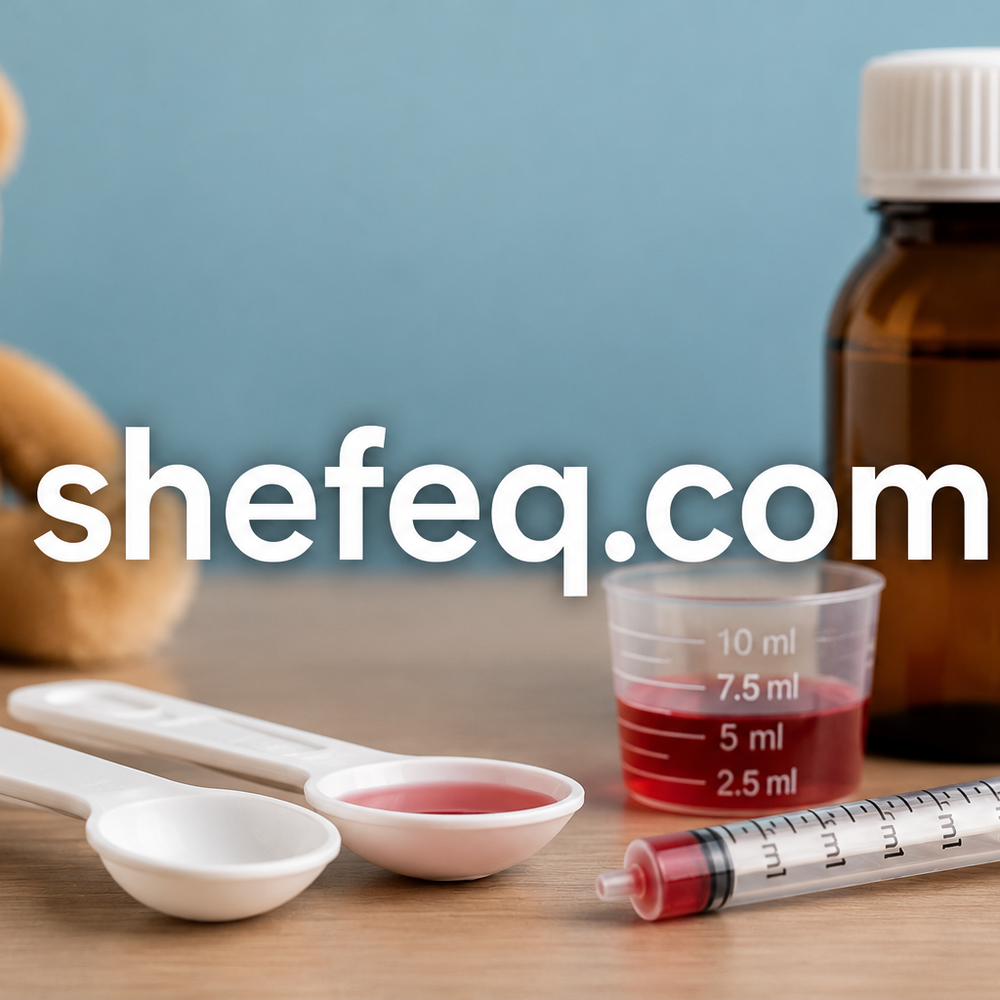
Doctors have repeatedly emphasized the importance of accurately measuring liquid medications. However, new research shows that many people still do not follow these recommendations. The consequences can be dangerous. Taking too much or too little medication can lead to serious health problems.
Measuring liquid medicines correctly can sometimes seem difficult. For this reason, doctors recommend using special measuring devices such as oral syringes, droppers, and measuring spoons. These tools provide more accurate results than ordinary kitchen spoons. However, recommendations are only effective if people actually follow them. A new survey shows that many parents do not adhere to these guidelines.
Dr. Shonna Yin, a pediatrician at New York University, and her team studied how parents interpret the dosing instructions on liquid medication labels. The study involved 2,096 parents who had at least one child aged eight years or younger.
Parents were shown a liquid medication label and asked which tool they would use to measure the medicine. The researchers found that many parents chose ordinary kitchen spoons instead of specialized measuring devices.
Interestingly, the term “teaspoon” has two different meanings. A measuring teaspoon used in baking has a standard volume and always measures the same amount. However, the teaspoons found in everyday tableware sets can vary considerably in size. As a result, parents who use such spoons may give their children either too much or too little medication.
The new study showed that a significant number of parents still prefer this method. The findings will be published in an upcoming issue of the journal Academic Pediatrics.
What Do the Numbers Show?
The researchers recruited parents who were visiting one of three outpatient clinics. Most of the families attending these clinics had low incomes.
The parents were randomly divided into five groups. Each group received different dosing instructions for liquid medication. Two groups received instructions expressed only in milliliters (mL). The other groups received instructions using both milliliters and teaspoons or only teaspoons.
The parents were shown pictures of different dosing tools. These included dosing spoons, measuring spoons, measuring cups, droppers, and oral syringes. Each device contained markings designed to ensure accurate measurements. The pictures also included ordinary kitchen teaspoons and tablespoons.
The parents were then asked:
“If you had all of these tools at home, which one would you use to give your child the correct amount of medicine?”
The results were concerning.
Parents who received dosing instructions expressed in teaspoons were much more likely to choose ordinary kitchen spoons. This trend continued even when the label also included measurements in milliliters.
Overall, 27.7 percent of parents who received labels using teaspoon measurements selected kitchen spoons. In contrast, only 8.3 percent of parents who received labels using only milliliter measurements chose kitchen spoons.
How Important Is Health Literacy?
Researchers believe that parents’ ability to understand health information directly influences their choices. They refer to this ability as “health literacy.”
Shonna Yin explains it this way:
“It is a person's ability to understand health-related information and use that information to make appropriate decisions about their health.”
According to the study, 77 percent of the participating parents did not demonstrate a high level of health literacy. This group was significantly less likely to choose accurate measuring devices.
According to experts, physicians and healthcare professionals need to provide parents with more education about properly measuring liquid medications because the consequences of mistakes can be severe.
“Kitchen spoons vary greatly in shape and size,” says Shonna Yin. “Using the wrong-sized spoon can result in giving a child more or less medication than intended.”
The findings are also supported by the U.S. Centers for Disease Control and Prevention (CDC) and the American Academy of Pediatrics. Both organizations recommend that healthcare providers and pharmaceutical companies present dosing information exclusively in milliliters.
Dr. Ian Paul, a pediatrician at the Penn State College of Medicine, also supports the recommendations of the American Academy of Pediatrics and states that using oral syringes marked with metric units is the safest way to administer liquid medications.
Otherwise, parents may confuse a teaspoon with a tablespoon or misunderstand measurements expressed in milliliters. For example, giving a child 2 tablespoons of medicine instead of 2 milliliters could result in the child receiving approximately 15 times the recommended dose. This could lead to abnormal heart rhythms, seizures, and other serious complications.
Shonna Yin believes that children should begin learning about their health from an early age.
“In this way, when they are no longer with their parents, they will know what they need to do to maintain their own health.”