
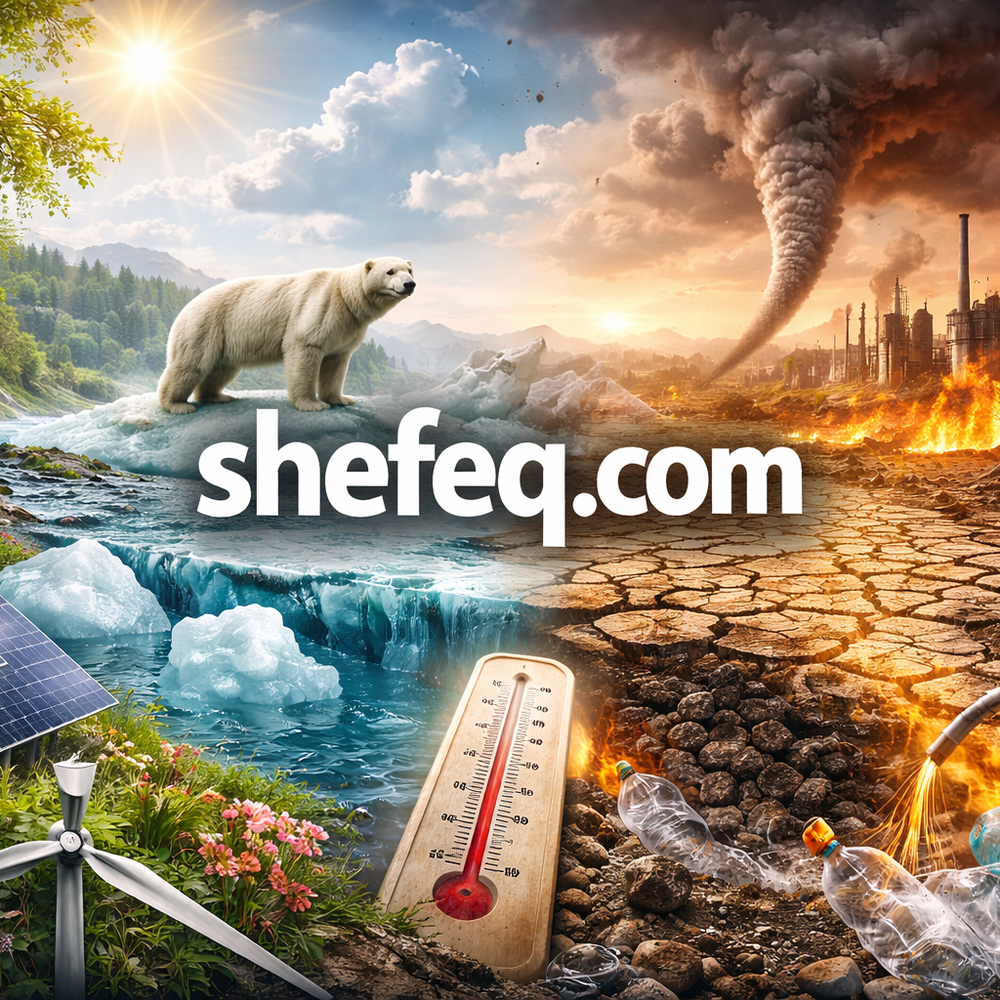
These terms are often used interchangeably. However, from a technical perspective, “global warming” and “climate change” are not the same concepts and carry different meanings.
Whether you are an everyday news reader or someone working in the scientific field, you have certainly encountered these terms. Despite this, many people do not fully understand the exact difference between them. Experts, however, emphasize the importance of clarifying this distinction while also calling for solutions aimed at saving our planet.
What Is Global Warming?
Global warming refers to the long-term increase in the average temperature of Earth’s atmosphere and oceans. According to Lauren Olson, an advocate of regenerative ecosystems and a zero-waste specialist at the Earth Center, this process primarily occurs as a result of the accumulation of greenhouse gases in the atmosphere.
Human activity—especially the burning of fossil fuels—raises levels of carbon dioxide (CO₂) and other greenhouse gases. These gases trap heat from the Sun within Earth’s atmosphere, causing the planet to warm.
The term “global warming” began to be widely used in scientific literature in 1975, when American geochemist Wallace Broecker published a study demonstrating that human activity was raising global temperatures to alarming levels.
According to NASA, since 1880 the average surface temperature of the Earth has increased by approximately 1°C (about 2°F).
What Is Climate Change?
Climate change is a broader and more complex concept. As Lauren Olson explains, the term encompasses “a wide range of environmental and technological factors affecting the planet.”
Climate change has always existed throughout Earth’s history. However, human activity—particularly since the Industrial Revolution—has dramatically accelerated this process. As a result:
-
ocean temperatures are rising
-
glaciers are rapidly melting
-
sea levels are increasing
-
floods, droughts, and powerful storms are occurring more frequently
Scientists warn that these phenomena are likely to intensify even further in the future.
What Is the Main Difference?
Simply put:
-
Global warming refers to the increase in the planet’s temperature
-
Climate change refers to the overall consequences caused by that warming
In other words, global warming is the cause, while climate change is the result. As Olson puts it:
“Climate change is driven by the effects of global warming.”
Why Is This Issue So Serious?
Confusion over terminology does not mean these processes are unreal. On the contrary, both global warming and climate change pose serious threats to the environment and human life.
Excessive consumption, the expansion of livestock farming, fossil fuel use, deforestation, air travel, and high carbon emissions all accelerate these processes.
Experts note that the United States is among the world’s largest carbon emitters and does not sufficiently adopt recycling and sustainable consumption models used in many other countries.
What Can You Do?
If we do not change our lifestyles, these dangerous trends will continue to worsen. Lauren Olson emphasizes:
“Climate is changing rapidly, and we must both help ecosystems adapt and significantly reduce greenhouse gas emissions.”
Even small individual actions can make a meaningful difference, such as:
-
choosing reusable containers instead of single-use products
-
reducing waste
-
prioritizing local and seasonal foods
-
using energy more efficiently
Conclusion
Although global warming and climate change are distinct terms, they describe different aspects of the same problem. Understanding these processes begins not with denying them, but with making responsible decisions.
Time is running out to protect our planet—but it is not too late.