
Source: The University of Queensland
Summary
New research presents the earliest known evidence of Homo sapiens using plant-based foods outside Africa and the Middle East.
It has been determined that the oldest plant foods ever discovered in Australia were consumed by early human populations approximately 65,000 years ago. These significant findings were revealed during archaeological excavations at the Madjedbebe site, located in the Arnhem Land region of northern Australia.
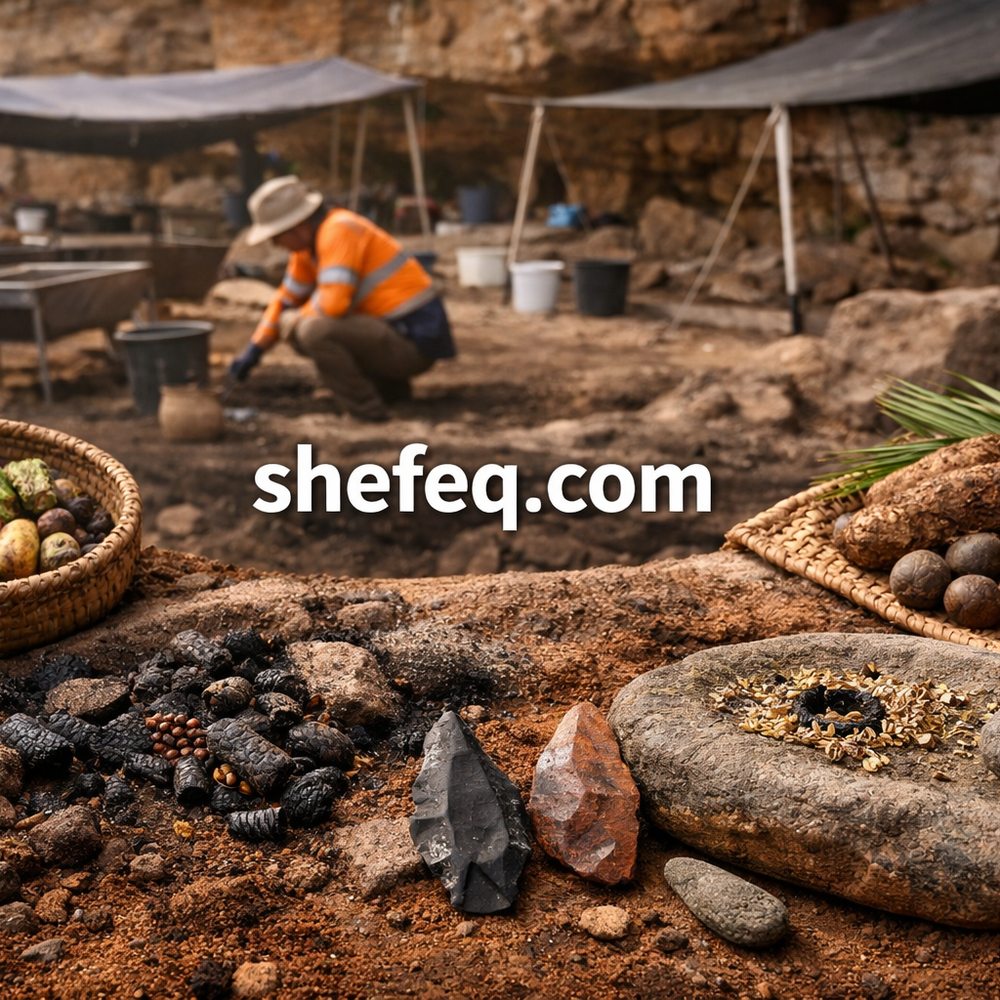
The plant remains were preserved in a charred state and were recovered from the debris of ancient hearths situated on land belonging to the Mirarr people. The research was conducted through a collaboration between University of Queensland archaeobotanist Anna Florin, a team of archaeologists, and the Traditional Owners.
As a result of the study, ten different types of plant foods were identified, including:
-
several varieties of fruits and nuts,
-
underground storage organs (roots and tubers),
-
palm stems.
Anna Florin stated that collaboration with Elders and co-authors May Nango and Djaykuk Djandjomerr made it possible to understand how plants were used at the Madjedbebe site.
“Most of these plant foods required processing to make them edible, and this is supported by evidence of stone technologies used during the early occupation of the site,” Florin noted.
According to her, the first Australians possessed highly developed botanical knowledge, which played a crucial role in their adaptation to and successful settlement of a new environment.
By combining this knowledge with technological innovation and physical labor, these early populations were able to obtain carbohydrates, fats, and even proteins from Australian plant resources.
Madjedbebe — Australia’s Oldest Known Occupation Site
Madjedbebe is a sandstone rock shelter located at the base of the Arnhem Land escarpment and is considered the oldest documented human habitation site in Australia.
The excavation director, Professor Chris Clarkson from the School of Social Science at the University of Queensland, said he was both surprised and delighted by the richness of the archaeobotanical evidence recovered from the site:
“Madjedbebe continues to provide remarkable insights into the complex and dynamic lifestyles of early Aboriginal Australians.”
Findings uncovered at the site include:
-
the world’s oldest known ground-edge stone tools,
-
the earliest stone technology found outside Africa,
-
early forms of stone spear points,
-
numerous grinding stones,
-
and the earliest recorded use of pigments anywhere in the world.
Cultural Heritage and Modern Protection
Today, Madjedbebe remains a place of great cultural significance for the Mirarr people, and efforts are ongoing to protect it from various threats.
Justin O’Brien, Chief Executive Officer of the Gundjeihmi Aboriginal Corporation, which represents the Mirarr Traditional Owners, stated that research conducted in meaningful partnership with Traditional Owners is a powerful way to share the enduring culture of the Mirarr with a wider audience.
Conclusion
These discoveries demonstrate that the first inhabitants of Australia were not merely hunter-gatherers, but communities with deep environmental knowledge who systematically and intelligently used plant resources. Madjedbebe holds a special place in history as a living testament to this knowledge and cultural richness.